Feed on
Posts
Comments

Tag Archive 'faculty achievements'

Anthony Braxton. (Photo by Jason Guthartz)

Anthony Braxton. (Photo by Jason Guthartz)

Anthony Braxton, the John Spencer Camp Professor of Music, has been honored with the 2013 Doris Duke Artist Award, one of the country’s most prestigious awards for individual artists. It comes with a $225,000 honorarium.

Braxton is a composer, saxophonist, teacher and philosopher with a career spanning half a century. He is also the founder of The Tri-Centric Foundation, a nonprofit that cultivates and inspires the next generation of creative artists to pursue their own visions with the kind of idealism and integrity Braxton has demonstrated throughout his long and distinguished career. The foundation also documents, archives, preserves and disseminates Braxton’s scores, writings, performances and recordings.

According to Mark Slobin, the Winslow-Kaplan Professor of Music, the Doris Duke Artist Award “complements Prof. Braxton’s earlier ‘genius grant’ from the MacArthur Foundation [in 1994], and serves as an ongoing recognition of his unique and long-lasting contribution to the performing arts in America and internationally.” At Wesleyan, Braxton is known for his close mentoring of students, many who have gone on to become prominent figures in the New York music world and abroad, said Slobin.

“As Braxton has signaled that he will retire in December, it seems a particularly timely moment to salute both his current standing and his more than two decades of University service,” he added.

The Doris Duke Artist Awards “invest in exemplary individual artists in contemporary dance, jazz, theatre and related interdisciplinary work who have proven their artistic vitality and commitment to their field,” according to the award website. In addition to an unrestricted monetary award, recipients are also given access to special goal assessment tools, financial and legal counseling, and conferences with peer-to-peer learning opportunities

Artists may not apply for the award. Candidates are selected from a pool of artists who have won at least three national grants, awards, accolades or fellowships in the past 10 years. An anonymous panel of performing arts professionals then review eligible candidates, assessing “the quality of the artist’s work, the maturity of the artistic voice, the value of a grant at this moment in their careers, and the dedication of the artist to continue to move forward with creativity and curiosity.

Jan Naegele is one of 19 women faculty in the country to receive a Drexel Fellowship.

Jan Naegele is one of 19 women faculty in the country to receive a Drexel Fellowship.

Jan Naegele, professor of biology, professor of neuroscience and behavior, was named a 2013-14 ELATE (Executive Leadership in Academic Technology and Engineering) at Drexel® Fellow for the 2013-14 academic year.

Naegele and 18 other women faculty in science, technology, engineering and math fields, received the fellowship. They come from a range of universities and colleges across the country, many with global experience.

The ELATE at Drexel® Fellow program focuses on increasing personal and professional leadership effectiveness, leading and managing change initiatives within their institutions, using strategic finance and resource management to enhance the missions of their organizations, and creating a network of exceptional women. Facilitated by leaders in the fields of science, technology, engineering and math research and leadership development, the curriculum includes classroom lessons and activities, online instruction and discussion, and on-the-job application at each fellow’s home institution.

In addition to learning about the financial planning and resource management in this program, each of the fellows has a project that they develop over the year-long program.

“While continuing the current support structure at the Center for Faculty Career Development, I will also develop new resources for minorities and women faculty, including workshops to assist junior faculty with their teaching and research,” Naegele said. “One topic to be addressed in workshops will focus on survival skills for junior science faculty as they set up their research laboratories, establish funded research programs, and recruit undergraduate and graduate students. Another will be to expand resources and mentoring to recruit and retain underrepresented minorities across the disciplines.”

The work for this second incoming class begins in May with online assignments and community building activities, and the program will conclude in March 2014 with a symposium organized around their projects. Naegele will begin the first of three week-long, in-residence sessions on July 31 at the ACE Conference Center in Lafayette Hill, Pa.

More more information visit Drexel’s website.

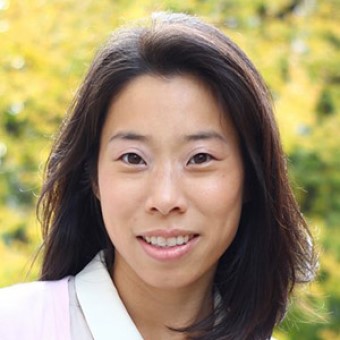
Lang Chen

Lang Chen

Lang Chen, a visiting instructor in religion, was named a 2013 Charlotte W. Newcombe Doctoral Dissertation Fellow by the Woodrow Wilson National Fellowship Foundation. The Newcombe Fellowship is the nation’s largest and most prestigious such award for Ph.D. candidates in the humanities and social sciences whose dissertations address questions of ethical and/or religious values. Each 2013 Newcombe Fellow will receive a 12-month award of $25,000.

Chen is teaching “Buddhism “and “(Non)violence in Buddhism” this semester at Wesleyan.

Chen also is a doctoral candidate in religious studies at Yale University. Her dissertation, Elixir or Poison? Indian Origins and Chinese Interpretations of Buddhist Antinomian Narratives, explores the origins of antinomianism in Indian Buddhist narrative literature and the pertinent philosophical development in China.

As a Newcombe fellow, she will return to her dissertation after the spring semester and try to finish it by March 2014.

“I believe while writing my dissertation, I will always recall my experience of teaching at Wesleyan and my inspirational students there,” she said. “According to the Buddhist idea of interdependence, my experience at Wesleyan has become and will always be a part of ‘me.’”

For more information on the fellowship see http://www.woodrow.org/news/news_items/WW_NewcombeFellows_2013.php.

“At Wesleyan, I have the opportunity to teach and try my ideas out on the best undergraduates I’ve ever met.” In this video, Professor Richard Adelstein talks about the defining characteristics of the students he’s encountered in his nearly 40 years at Wesleyan.

YouTube Preview Image

#THISISWHY

Richard Grossman, professor of economics.

Professor of Economics Richard Grossman has been named a 2013 Guggenheim Fellow. He will work on a project about the evolution of banking regulation across the industrialized world.

Awarded by the John Simon Guggenheim Memorial Foundation, the fellowship assists research and artistic creation “for men and women who have already demonstrated exceptional capacity for productive scholarship or exceptional creative ability in the arts.” This year, 175 scholars, artists and scientists were selected to receive fellowships from a group of almost 3,000 applicants from the U.S. and Canada.

“The Guggenheim Foundation has been giving awards to distinguished scholars and artists for nearly 90 years, including Nobel laureates, Pulitzer Prize winners, a winners of a host of other important awards. It is an honor to be in such company,” said Grossman. “It is particularly meaningful to be the only member of the 2013 class of Guggenheim Fellows who is an economist.”

Describing his project, Grossman said, “I will be looking in particular at how historical evolution affects current day banking regulation—what those in the business call, ‘path dependence.’ So, for example, if California had particularly liberal banking laws (eg. Easy entry into banking, a minimum of restrictions on how banks can conduct business) in the 19th century, and if Connecticut had particularly stringent laws (eg. High barriers to entry, many restrictions on banking operations), how likely is it that the relative stringency of their laws will remain today?”

He added, “I am excited about this research. When banks work well, they contribute to economic prosperity; when they don’t, things can go very wrong. This research will help identify which regulatory regimes have been conducive to economic growth and stability and which have not. I hope that the results will provide guidance to policy makers in the U.S., Europe, and Japan who are currently crafting new regulations.” (more…)

Andy Szegedy-Maszak

Andy Szegedy-Maszak

In his role as 2013 Distinguished Teaching Fellow, Andy Szegedy-Maszak, professor of classical studies and the Jane A. Seney Professor of Greek, brought a slice of Wesleyan to members of the Wesleyan community—alumni, parents, admitted students—living in select cities on the West Coast.

The Distinguished Teaching Fellowship—of which Szegedy-Maszak is the first recipient—offers the professor the opportunity to teach a course outside of his/her usual departmental offerings. Szegedy-Maszak is teaching a course through the Allbritton Center for the Study of Public Life on photography and its effect on social movements. It was this topic he explored in his WESeminar on the Road, which took him to San Diego, Los Angeles, San Francisco and Seattle.

His talk included a discussion of Jacob Riis’s photos of tenement dwellers in New York City during the late 1800s, published in the famous book How the Other Half Lives, along with images of Depression-era tenant farmers in Let Us Now Praise Famous Men by writer James Agee and photographer Walker Evans. Additionally, Szegedy-Maszak analyzed one other photograph that helped focus his thoughts on the ability of photography to influence social change. (more…)

Joyce Jacobsen

Joyce Jacobsen

Joyce Jacobsen, the Andrews Professor of Economics, will become dean of the Division of Social Sciences and Interdisciplinary Programs beginning July 1 for three years. Jacobsen brings to this role substantial experience in Wesleyan’s faculty governance process, having served as chair of the faculty, chair of the Educational Policy Committee, chair of the Economics Department, co-chair of the College of Social Studies, vice-chair of the Review and Appeals Board, and on the governing board of the Center for the Study of Public Life.

A scholar of the economics of gender and employment, she is author, co-author, and editor of three books, more than 35 journal articles and book chapters, and more than 45 essays and reviews.

Jacobsen has taught at Wesleyan for 20 years, and won the Binswanger Prize for Excellence in Teaching in 2007.

Gina Ulysse delivers a TEDxUofM talk at the University of Michigan's Power Center on April 5. (Photo by Aimée Xia)

Gina Ulysse delivers a TEDxUofM talk at the University of Michigan’s Power Center on April 5. (Photo by Aimée Xia)

Gina Ulysse made a 13-minute presentation during “Untapped,” the fourth annual TEDxUofM ideas convention at the University of Michigan on April 5. Ulysse is associate professor of African American studies, associate professor of anthropology and director of the Center for African American Studies.

Ulysse, a University of Michigan alumna, was one of 20 speakers at the event. More than 1,300 guests attended. Ulysse focused her talk on untapped creativity and why she is turning to performance work at this stage of her life.

“With a broad range of topics ranging from NASA funding, creativity, brain cancer research, philanthropy, a food cart hero, ground-breaking physical therapy, Detroit, teaching philosophy, life outside of prison, Arab stereotypes, gay bashing and bullying, among other things, I certainly can attest to the fact that the event was engaging and thought-provoking,” she said.

While at the conference, Ulysse was inspired by the student-organizers’ “dedication and infectious spirit of openness to ideas and difference.” She wrote about her experience working with the students in this Huffington Post article.

Richard Grossman, professor of economics.

Professor of Economics Richard Grossman was an invited discussant at a conference on “Understanding the Capital Structures of Non-Financial and Financial Corporations,” sponsored by the National Bureau of Economic Research. The conference took place in Cambridge, Mass. on April 5-6.

Grossman discussed a paper titled “Short-Term Debt and Financial Crises: What can we Learn from Treasury Supply,” by Arvind Krishnamurthy and Annette Vissing-Jorgensen, both of Northwestern University.  For more information see the conference’s website.


Ellen Alexander '14, Professor Joop Varekamp and graduate student Lauren Camfield in Argentina.

Ellen Alexander ’14, Professor Joop Varekamp and graduate student Lauren Camfield in Argentina.

Ellen Alexander ’14, Professor Joop Varekamp and graduate student Lauren Camfield recently returned from Argentina where they studied the eruptive products of the Copahue volcano March 7-March 19.

Varekamp, the Harold T. Stearns Professor of Earth Science, professor of environmental studies, has studied the volcano since 1997. It erupted in 2000 and again in December 2012.

“Many Wesleyan students have done their senior theses and grad theses on Copahue. It’s exciting stuff for us volcanology types,” Varekamp said.

Camfield sampled the products of the most recent eruption of Copahue, which included ash, pumice and volcanic bombs. She will analyze her samples at Wesleyan for major and trace elements on a X-ray fluorescence machine and analyze any melt inclusions at the American Museum of Natural History in New York on an electron microprobe.

“This information can give us insight on what is happening in the magma chamber of the volcano as well as depth of crystallization of minerals,” Camfield said. (more…)

The Wesleyan Board of Trustees reviews tenure cases three times each year during its meetings on campus, scheduled as the cases arise. At the most recent meeting in March, the Board awarded tenure — effective July 1, 2013 — to these faculty members:

Elijah Huge, associate professor of art, has taught at Wesleyan since 2006.  A licensed architect, his work includes private commissions and award-winning competition entries for the High Line (New York, N.Y.), the Bourne Bridge|Park (Bourne, Mass.), and the Tangshan Earthquake Memorial (Tangshan, China).  His writing and design work have been featured in PraxisThresholdsPerspectaArchitectural RecordLandscape ArchitectureDwellJournal of Architectural Education, and Competitions.  His current scholarly research examines the historical emergence of architectural emergency devices, from the automatic sprinkler to the Vonduprin panic bar. He founded the atelier North Studio as part of the architecture curriculum within the Department of Art and Art History. Through it, students work in collaboration with each other and Huge to develop and produce research-driven and conceptually-driven projects with real-world clients. The work of the studio has been published widely and received awards from the American Institute of Architects, the Connecticut Department of Environmental Protection, and the Association of Collegiate Schools of Architecture. His B.A. and M.Arch. are from Yale University, where he received the AIA Henry Adams Medal and was editor of Perspecta 35: Building Codes.

Barbara Juhasz, associate professor of psychology, associate professor of neuroscience and behavior, came to Wesleyan in 2006. She studies the cognitive processes involved in word recognition during reading. In particular, she is interested in the interpretation of the visual input of written language. She is author or co-author of more than 35 articles and book chapters, eight of which include Wesleyan students as co-authors, as well as more than 40 conference presentations. She holds a B.A. from Binghamton University; her M.S. and Ph.D. are from the University of Massachusetts, Amherst.

Steven Stemler, associate professor of psychology, came to Wesleyan in 2005. (more…)

Sumarsam and symposium organizer John Bell, director of the Ballard Institute and Museum of Puppetry at the University of Connecticut, spoke on “Puppets and Texts: Global Perspectives."

Sumarsam and symposium organizer John Bell, director of the Ballard Institute and Museum of Puppetry at the University of Connecticut, spoke on “Puppets and Texts: Global Perspectives.”

Sumarsam, the University Professor of Music, discussed Indonesian puppetry during the Playwriting, Puppets and Dramaturgy Symposium March 9 at the University of Connecticut Puppet Arts Complex.

The symposium brought together playwrights, puppeteers, dramaturgs, students and puppetry enthusiasts to share ideas and experiences about the practice, theory, and history of puppetry’s uses of text in performance.

Experts discussed ways the visual dramaturgy of puppetry’s sculpture in motion works in tandem with dramatic and narrative texts.

Sumarsam and symposium organizer John Bell, director of the Ballard Institute and Museum of Puppetry at the University of Connecticut, spoke on “Puppets and Texts: Global Perspectives.” This was Sumarsam’s third time speaking about puppetry at UConn. Wesleyan’s Theater Department has invited Bell and his colleagues to perform and speak at Wesleyan.

“We at Wesleyan Theater and Music Departments have a good connection with the puppetry program at UConn,” Sumarsam said.

View more photos of the event in this Facebook gallery.

Sumarsam also will take part in the “Indonesian Performing Arts and Public Life” event,  April 25-27 at Wesleyan.

Next »