Feed on
Posts
Comments

Tag Archive 'history'

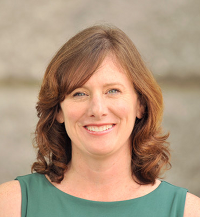
Leah Wright, assistant professor of history, assistant professor of African American studies, is an expert on United States history, African American studies and American politics. (Photo by Stefan Weinberger '10)

Leah Wright, assistant professor of history, assistant professor of African American studies, is an expert on United States history, African American studies and American politics. (Photo by Stefan Weinberger '10)

Leah Wright, assistant professor of history, assistant professor of African American studies joined Wesleyan’s staff this summer.

Wright says she loves being part of an interdisciplinary community and “was impressed by the intellectual curiosity and academic excellence of the students at Wesleyan.” Multiple factors attracted her to the university.

“I was also excited about the faculty—there is equal attention paid to teaching and research, and as a result, Wesleyan faculty excel at both. Joining Wesleyan was a major opportunity to join a vibrant and welcoming intellectual community.”

She graduated cum laude from Dartmouth College in 2003 with a bachelor’s in history. Wright went on to obtain a Master’s and a Ph.D. in History from Princeton University. This summer she defended her doctoral dissertation titled “The Loneliness of the Black Conservative: Black Republicans and the Grand Old Party, 1964-1980.” Wright is currently negotiating with publishers to convert her manuscript into a published book.

Wright’s book proposal abstract reads: “Traditionally, the scholarship on civil rights has assumed that the movement existed solely within the boundaries of liberalism; however, this project argues that black Republicans also attempted to promote a genuine agenda of racial equality, civil rights, and black uplift through the conservative movement and the Republican apparatus. Despite the seeming contradiction of African Americans working for civil rights in a party that appeared increasingly hostile to that very idea, many black Republicans did see themselves as part of the movement. In many ways this story is a comparative project about the vision for black equality and advancement.”

Her research interests include United States history, African American studies and American politics. Her extensive research on Black conservatives in the U.S.—specifically Black Republicans—combines all of her interests. Additionally, she has studied women in the Black Power movement and Marcus Garvey, the founder of the Universal Negro Improvement Association

Wright is the author and co-author of several articles, including “Conscience of a Black Conservative: The 1964 Election and the Rise of the National Negro Republican Assembly,” in Federal History.

Wright was awarded with a Woodrow Wilson Foundation Dissertation Writing Fellowship for 2008 – 2009. Notably, she has received three presidential libraries grants (i.e. the Lyndon Baines Johnson Presidential Library Research Grant, the Gerald Ford Presidential Library Research Grant and the George H.W. Bush Presidential Library O’Donnell Research Grant). Wright received multiple Social Science Research Council (SSRC) Development/Enhancement Grants throughout her scholarship. She was a Andrew W. Mellon Fellow from 2001 to 2003 and is the first Mellon Fellow to join the Wesleyan faculty, according to Krishna Wilson, who is the coordinator of the Mellon Mays Undergraduate Fellowship at Wesleyan.

This semester, Wright is teaching 20th Century Black Conservatism and The Long Civil Rights Movement in America. In spring 2010, she will be teaching Modern African-American History and U.S. Political History Since 1945.

For her civil rights course, Wright enjoyed working with Valerie Gillispie, Assistant University Archivist, to expose students to the resources within Wesleyan’s archives.

“The Civil Rights Archive at Wesleyan is a wonderful resource,” Wright says.

“Val Gillispie took us through a guided tour of archival resources that allowed the students to better understand Wesleyan’s significant connection to the broader Civil Rights Movement. It was an exciting opportunity for students to ‘get their hands dirty’—and search through interesting, and relevant archival resources—which is a critical component for any historian.”

Wright is a native of Hartford and enjoys traveling, reading, and watching college basketball (her brother plays for Providence College).

Listen to Leah Wright’s recent appearance on WNPR’s Where We Live.

Paul Erickson. (Photo by Corrina Kerr)

Paul Erickson was honored for his contribution to the History of Science in Western Civilization. (Photo by Corrina Kerr)

Paul Erickson, assistant professor of history and assistant professor of Science in Society, has been awarded the 2009 Prize for Young Scholars from the International Union for the History and Philosophy of Science, Division of History of Science and Technology (DHST). He received the award at an August ceremony in Budapest, Hungary.

The award was bestowed in recognition for Erickson’s significant scholarly contribution to the History of Science in Western Civilization. The prize is awarded every four years at meetings of the Union Congress to recent PhDs in the history of science and technology for outstanding dissertation projects on topics in the western tradition. Erickson’s dissertation, “The Politics of Game Theory: Mathematics, Rationality, and Cold War Culture” impressed the award committee with its “innovative approach” and manner of making “mathematics and Cold War culture accessible for a critical discussion.”

In citing his dissertation, the prize committee stated “Erickson did a brilliant job in discussing a topic with a mathematical image in a real historical way.” The citation also heralded Erickson’s ability to explain the “incompatible applications of game theory in the military and evolutionary realm.” Notably, Erickson was selected for the Young Scholars award by unanimous vote of the prize committee.

Erickson's award.

Erickson's award.

Game theory, which models strategic interactions between rational individuals, was developed in the 1920s and `30s by the Hungarian-American mathematician John von Neumann and the Austrian economist Oskar Morgenstern. The theory’s original inspiration was parlor games like chess and poker, but in the wake of World War II, military-funded mathematicians found applications of the theory to problems of tactical decision-making and logistics. Subsequently, game theory has become a central modeling technique throughout the social and biological sciences, from economics and psychology to evolutionary biology, according to Erickson.

“Game theory is also a theory of how human beings should behave rationally, perhaps; how they do behave; how they might behave and so forth,” Erickson says.

”My work can be read on two levels. On one hand, it tells the history of game theory as a branch of mathematics. On the other, it presents a history of rationality in 20th century America by focusing on links between game theory and broader currents in American culture and politics,” he says.

Erickson explored the ways in which rationality became a seriously contested concept in the nation during the Cold War—especially from a political and cultural standpoint.

Erickson completed his PhD in the History of Science at the University of Wisconsin at Madison and has been at Wesleyan University since summer, 2008. He specializes in the science of the Atomic Age, the history of ecology, biology and technology, game theory’s wider applications in science and social science, the study of populations and science in public policy, among other research specialties and interests.

Photos from the Union Congress are available here.

Wesleyan University received a grant worth $177,918 from the U.S. Department of Education to help establish a Middle Eastern Studies Certificate Program at Wesleyan. The grant will be applied over two years.

Bruce Masters, the John E. Andrus Professor of History, says he and other interested faculty will propose to the Educational Policy Committee an interdisciplinary cluster of courses that will allow interested students to graduate with a certificate in Middle Eastern Studies, in addition to their departmental/program major.

The grant, along with a commitment from Academic Affairs, is supporting a long-term contract adjunct instructor in Arabic language.

Claire Potter, professor of history, chair and professor of American studies, director of the Center for the Americas, is featured in a June 24 Inside Higher Ed article titled “Fifty Years After Stonewall.” Police raided the Stonewall Inn in Greenwhich Village in June 1969 and drag queens fought back. In the article, Potter says the GLBTQ liberation “is unfinished and becoming more complex as the research emerges that takes us on beyond Stonewall. What I would like for transgender studies in 10 years is what is happening already in gay and lesbian history: placing the emergence of identities and the emergence of liberation struggles in a longer history that goes beyond the North American 20th century.” The entire article is online here.

A book review by Kirk Swinehart, assistant professor of history, was published in the June 27 edition of The Chicago Tribune. Swinehart writes about the novel, Tall Man, written by Australian author Chloe Hooper. According to the review, Hooper has written an account of life and death on Australian’s Palm Island “as fast paced as it is horrific. Australians long ago consigned Palm Island to the bin of places best forgotten. And there it stayed until November 2004, when a 36-year-old Aboriginal man named Cameron Doomadgee died in police custody. Overnight, Palm Island became the epicenter of a wrenching national debate about race and, by implication, the legacy of British imperialism.” The entire review is online here.

Valerie Gillispie, assistant university archivist at Wesleyan University, flips through the pages of a class photo album dated 1873. A gentleman from Newark, Del. found the album in a pile of books and donated it back to Wesleyan this month. (Photo by Olivia Bartlett)

Valerie Gillispie, assistant university archivist at Wesleyan University, flips through the pages of a class photo album dated 1873. A gentleman from Newark, Del. found the album in a pile of books and donated it back to Wesleyan this month. (Photo by Olivia Bartlett)

When John Chambless was rummaging through a pile of old books at his mother’s home in Newark, Del., one mammoth album with an ornate and intertwined “WU” stuck out. Curious, he opened it up and discovered an album containing more than 50 black and white hand-laid photos of students, staff and campus buildings dated 1873.

Intrigued by the mysterious book that lacked attribution, Chambless began a series of internet searches in attempt of finding the book’s origin. (more…)

William Manchester in his Wesleyan University office about 1979. (Photo by William Van Saun/Wesleyan University via Associated Press)

Author William Manchester , pictured here about 1979, worked from an office on the north side of Olin Library. The office disappeared with the library addition. (Photo by William Van Saun/Wesleyan University via Associated Press)

During his 82-years of life, author and historian William Manchester made himself known for his writings on Winston Churchill, President John F. Kennedy, Douglas MacArthur, among other great figures.

On Feb. 5, the Friends of the Wesleyan Library will sponsor an event honoring and celebrating Manchester, a writer in residence at Wesleyan whose ties to the university date back to 1955. Manchester died at his home in Middletown, Conn. in June 2004.

“There are so many people on campus who still remember Manchester,” says Leith Johnson, project archivist for Wesleyan’s William Manchester Papers. “Almost all of his books made it onto bestsellers lists. (more…)

 Brian Fay, the William Griffin Professor of Philosophy and tutor in the College of Social Studies, is the executive editor of the journal <i>History and Theory</i>. The publication is owned by Wesleyan and edited by faculty.

Brian Fay, the William Griffin Professor of Philosophy and tutor in the College of Social Studies, is the executive editor of the journal History and Theory. The publication is owned by Wesleyan and edited by faculty.

Q: Brian, in addition to being the William Griffin Professor of Philosophy and tutor in the College of Social Studies, you are the executive editor of the journal History and Theory. What is the purpose of the publication?

A: The purpose of the journal is to publish the best current thinking about the theory and philosophy of history. We also maintain a discussion network that provides a site for members to communicate about matters relevant to our subject area. Lastly, we seek to enhance the intellectual life at Wesleyan (more…)

The Camera as Witness" presentation and panel Nov. 7.

Documentary photographer Wendy Ewald explained how photography relates to personal history during the "Eye of History: The Camera as Witness" presentation and panel Nov. 7.

“We can never really claim to have seen anything unless it has been photographed.” — Émile Zola, c. 1901, Minutes of the Camera Club of Paris

Documentary photographers, contemporary visual artists and historians grapple with issues of photographic meaning, evidence, and interpretation.

This fall, Wesleyan has hosted a series of exhibitions, talks and films that explore photography’s role in historiography, historical memory and public life. Organized by Associate Professor of History Jennifer Tucker, “Eye of History: The Camera as Witness” serves as a meeting point for people who share a common interest in photography, art and historical memory.

On Nov. 7, internationally-renowned documentary photographers Wendy Ewald, Eric Gottesman and Susan Meiselas joined acclaimed writer and critic David Levi Strauss in a panel discussion about photography’s role in the world today. (more…)