Feed on
Posts
Comments

Tag Archive 'alumni'

Patrick Osborne

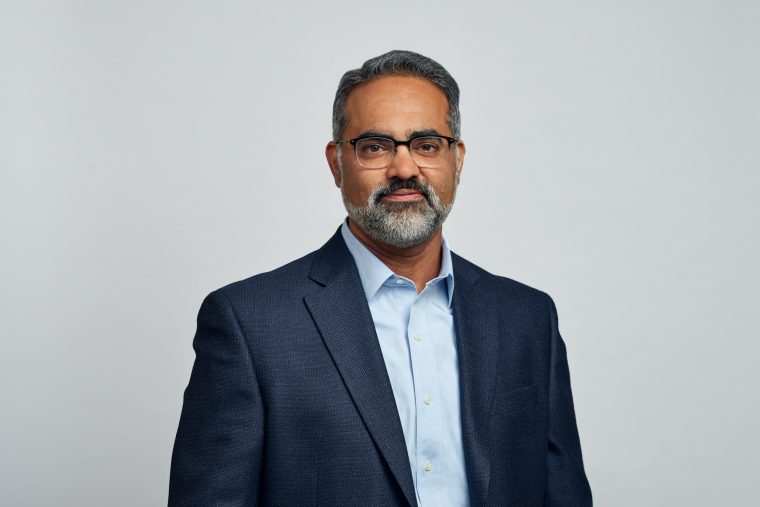
Patrick Osborne, executive director of the Whitney R. Harris World Ecology Center at the University of Missouri - St. Louis, will speak on climate change during the Where on Earth Are We Going symposium Nov. 7.

During the last 50 years, humans have degraded rivers and lakes through excessive water abstraction, pollution and by over-harvesting aquatic organisms. River flow has been impeded by dams, and floodplains have been converted for agriculture and urban areas.

The human population has doubled to nearly 7 billion and, per capita water availability has declined on all continents. During the past 50 years, global climate change has further impacted water resources.

On Nov. 7, three climate experts will speak on “Global Environmental Change And Freshwater Resources: Hope For The Best Or Change To Prepare For The Worst?” during the annual Where On Earth Are We Going? Symposium. The event is sponsored by the Robert Schumann Lecture Series in the Environmental Studies Program.

At 9 a.m., Patrick L. Osborne, executive director of the Harris World Ecology Center at the University of Missouri-St. Louis, will look at ways climate change and global warming have altered river and lake function and the water resources on which humans rely. He has 30 years experience in tropical ecology research, education and environmental consultancy and was the head of the biology department at the University of Papua New Guinea and deputy director of the Water Research Center at the University of Western Sydney in Australia.

At 10:15 a.m., Frank H. McCormick, program manager of Air, Water and Aquatic Environments at the Rocky Mountain Research Station, (more…)

Ural Grant '13 was one of 28 Wesleyan students who participated in the Management Leadership Conference Oct. 23-26. During the conference's opening dinner and keynote address, students had the opportunity to network with alumni, student parents and Wesleyan faculty from a variety of industries and career fields. The MLC is designed for students who aspire to hold top management and leadership positions after graduation.

Ural Grant '13 was one of 28 Wesleyan students who participated in the Management Leadership Conference Oct. 23-26. During the conference's opening dinner and keynote address, students had the opportunity to network with alumni, student parents and Wesleyan faculty from a variety of industries and career fields. The MLC is designed for students who aspire to hold top management and leadership positions after graduation.

Michael Sciola, director of the Career Resource Center, spoke to students about program expectations and led a responsibly discussion prior to the conference. The MLC program is a joint effort of the Career Resource Center, Career Advisory Council, and the Office of Alumni and Parent Relations.

Michael Sciola, director of the Career Resource Center, spoke to students about program expectations and led a discussion on responsibility prior to the conference. The MLC program is a joint effort of the Career Resource Center, Career Advisory Council, and the Office of Alumni and Parent Relations.

ESPN.com Editor-in-Chief Robert King '84 delivered the keynote address during the conference Oct. 23 in Beckham Hall. King explained how he worked his way up from an editorial assistant at the Washington Post to becoming a cartoonist, reporter, graphic designer, sports editor and deputy managing editor for visuals at other newspapers. After 22-years in the newspaper business, King joined ESPN in 2004.

ESPN.com Editor-in-Chief Robert King '84 delivered the keynote address during the conference Oct. 23 in Beckham Hall. King explained how he worked his way up from an editorial assistant at the Washington Post to becoming a cartoonist, reporter, graphic designer, sports editor and deputy managing editor for visuals at other newspapers. After 22-years in the newspaper business, King joined ESPN in 2004.

Erwin Dwi Saputra '11 listens to King's address.

Erwin Dwi Saputra '11 listens to King's address.

Dick Miller, the Woodhouse/Sysco Professor of Economics, Emeritus, spoke to students during the conference.

Dick Miller, the Woodhouse/Sysco Professor of Economics, Emeritus, spoke to students during the conference.

Nam Anh Ta '12 was one of the student participants.

Nam Anh Ta '12 was one of the student participants.

Gregory Rolland '95 spoke to students about his role as an accountant with Moriaty & Primack, PC in Springfield, Mass.

Gregory Rolland '95 spoke to students about his role as an accountant with Moriaty & Primack, PC in Springfield, Mass.

Taylor Sander '12 mingles with parents and alumni during the dinner. MLC participants spent the following days with business leaders in Middletown and in New York City. (Photos by Olivia Bartlett Drake)

Taylor Sander '12 mingles with parents and alumni during the dinner. MLC participants spent the following days with business leaders in Middletown and in New York City. (Photos by Olivia Bartlett Drake)

More information on the Management Leadership Conference is online at http://www.wesleyan.edu/mlc/2009/

Peter Shumlin ’79

Peter Shumlin ’79

Vermont State Senator Peter Shumlin ’79 will be honored at the 8th Annual Human Rights Campaign New England Dinner, to be held in Boston on Nov. 14. HRC New England, the largest GLBT civil rights advocacy group in the country, is this year presenting the marriage equality award to “those who were heroes in our fight for equality.”

As President Pro Tempore of the Senate, Shumlin is considered instrumental on the April 15, 2009 Vermont legislature’s vote to override the governor’s veto and pass same sex marriage into law for the state.

Shumlin spoke about his reasons to support the bill last March on Vermont Public Radio. He called the passage “one of the proudest moments of my life” on the UK’s Guardian web site, where he traces his involvement in this historic legislation back to 2000.

“I owe a lot of my commitment to helping promote social justice to my Wesleyan experience,” he says.

It is expected that on Nov. 16, he will announce his candidacy for the Democratic nomination for Vermont Governor.

A recent article in the Tennessean highlighted a notable discovery at Nashville’s Parthenon Museum: a rare and complete copy of William J. Stillman’s 1870 photographic book, The Acropolis of Athens, Illustrated Picturesquely and Architecturally in Photography.

Museum assistant curator Brenna Cothran '01 at the Parthenon — Nashville's full-scale replica of the Athenian temple — shows a copy of William J. Stillman's photographic works. (Photo by Jae S. Lee / The Tennessean)

Museum assistant curator Brenna Cothran '01 at the Parthenon — Nashville's full-scale replica of the Athenian temple — shows a copy of William J. Stillman's photographic works. (Photo by Jae S. Lee / The Tennessean)

Registrar and Assistant Curator Brenna Cothran ’01 came across it as part of an ongoing four-year-old project of inventorying every item in storage as other duties permitted. She told Tennessean journalist Janell Ross that when she saw the book, which had been stashed away in a storage room drawer, “The hair on my arms stood up. It was kind of this adrenaline rush.”

Stillman, an American painter, photographer, journalist, and diplomat had published this work at a time when photography was, one might say, in its adolescence, and tourism had just begun to flourish. Nineteenth- and early early-2oth century admirers of Stillman’s work often removed the pages of the album to frame and hang on their walls. Thus, finding a complete copy of his book is highly unusual and the museum set about raising funds to cover the cost of conserving and restoring it.

Now, the back story. The reason Cothran immediately knew this was an exceptional find: her Wesleyan education—specifically classes with Professor Andy Szegedy-Maszak, who admits, “I guess I talked a bit about William James Stillman, about whom I’ve written a fair amount.” Stillman was a natural subject for the Classical Studies professor who, with his wife, writer Elizabeth Bobrick, has assembled a noteworthy collection of photographs, a number of which have recently been on exhibit at the Getty Museum and were exhibited in 1998 at Wesleyan’s Davison Art Center.

Additionally, Cothran’s find has also served to reconnect the former student with Szegedy-Maszak her former professor. “She wrote me immediately,” he says, “and we’ve been back in touch ever since.” Recently she notified him that the Tennessean article sparked the interest of a donor who has agreed to underwrite the entire cost of restoring the album. “The whole thing is pretty cool,” Szegedy-Maszak says.

Cothran agrees: “When I took art history, Latin literature, and other humanities classes at Wesleyan, I took them for the love of learning. At the time, I never imagined that just a few years later, I would be lucky enough to have a job that allowed me to put what I learned to use. This experience has highlighted for me the value of the education I got at Wesleyan.”

Tim Hollister '78

Tim Hollister '78

A father whose 17-year-old son died while driving in 2006, and who went on to take a leadership role in a statewide task force that advised the state legislature on rewriting Connecticut’s teen driving laws, has launched a national blog for parents on safe teen driving.

Tim Hollister ‘78, a West Hartford, Conn. resident and attorney, lost his son Reid in a one-car accident on Interstate 84 in Plainville, Conn. in December 2006. During 2007-08, as a member of Connecticut Gov. Jodi Rell’s Safe Teen Driving Task Force, Hollister immersed himself in the issue of why driving is the leading cause of death for teens, and became an advocate for better-informed parental decision-making about teen driving.

“My son’s accident led me to study teen driving laws and statistics in Connecticut and nationally,” Hollister said, “but it was my discovery, as a task force member, that the literature and resources available to parents rarely explain the dangers of teen driving that prompted me to start this blog.”

The blog, “From Reid’s Dad,” is found at http://www.fromreidsdad.org.

“I was astounded to learn that even though 6,000 teen drivers and 2,000 of their passengers die every year, and 400,000 kids are seriously injured, the driving manuals and other literature usually say little more than ‘Be careful.’ Cigarette packs carry warnings about death, and patients going into surgery are warned multiple times that death is a potential consequence, but the driving literature doesn’t warn parents about how dangerous teen driving is, and why,” Hollister observed. “Meanwhile, every night on television we see ads with cars doing 360’s on busy city streets, crashing through glass, spinning into parking spaces, and weaving through dense traffic at high speeds, all without a scratch. Our culture glorifies risky driving. We need a counterbalance that will caution parents and teens.”

In addition, Hollister noted that “Many parents are seduced by the convenience of having another driver in the house, or their pride in their child passing a milestone toward adulthood. My blog is an effort to counsel parents not to put convenience and pride ahead of safe decisions. I have no intention of telling parents how to handle their own kids. My goal is to make important information about teen driving accessible and clear, so that parents will make better decisions.”

The blog, launched in the wake of the federal government’s national summit on distracted driving, includes the story of the death of Hollister’s son and how it led to his service on Connecticut’s task force and his advocacy for safer driving; a list of tips for parents of teen drivers; a summary of Hollister’s teen driving activities; two initial posts, “There Is No Such Thing As A Safe Teen Driver” and “Baseline Dangers and Higher Risks;” and links to informative national websites and databases.

New CD by Steve Lehman '00

New CD by Steve Lehman '00

Steve Lehman ’00 is an alto and soprano jazz saxophonist who continues to receive praise from jazz critics across the country for performing music on the cutting edge. He is one of several graduates who studied jazz at Wesleyan and have gone on to notable music careers. Lehman is currently a doctoral candidate in music composition at Columbia University.

Travail, Transformation & Flow (Pi Recordings), his latest CD with his octet, was recently reviewed on NPR’s Fresh Air. NPR describes Lehman as “an explorer in the esoteric compositional realm labeled ‘spectral harmony,’ and perhaps his most ambitious innovation is that he’s taken that discipline’s rigorous, math- and computer-based analytical processes and put them to work in the fluid, improvisation-driven genre of jazz.”

Book by Sabrina McCormick ’96

Book by Sabrina McCormick ’96

In No Family History (Rowman and Littlefield, 2009), Sabrina McCormick ’96 offers convincing and compelling evidence of environmental links to breast cancer, ranging from everyday cosmetics to industrial waste. She writes lucidly about the a growing number of experts who argue that we should increase focus on prevention by reducing environmental exposures that have contributed to the sharp increase of breast cancer rates.

McCormick also weaves the story of one breast cancer survivor with no family history of the disease into a powerful exploration of the big business of breast cancer—as drugs, pink products, and corporate sponsorships generate enormous revenue to find a cure. Money continues to be allocated for the search for a cure, and McCormick argues that the companies that profit, including some pharmaceutical and cosmetics companies, may contribute to the environmental causes of breast cancer. Her book reveals how profits drive our public focus on the cure rather than prevention, and also suggests new ways to reduce breast cancer rates in the future.

McCormick is a Robert Wood Johnson Health and Society scholar at the University of Pennsylvania and an assistant professor of environmental science and sociology at Michigan State University. She is the director and producer of the independent feature-length documentary No Family History. Her web site is www.nofamilyhistory.org.

In early October, the White House press office announced that the President Obama and his family had chosen 45 art works borrowed from several Washington museums to decorate various White House walls, including the text painting Black Like Me No. 2 by Glenn Ligon ’82, which is on loan from the Hirshhorn Musuem.

In an article in the Washington Post about the Obamas’ selection of art works, Blake Gopnik described Ligon as “one of the best one of the best African American artists working today, and also one of the smartest and toughest. His loaner work is a tall white canvas covered from top to bottom with the repeated phrase ‘All traces of the Griffin I had been were wiped from existence,’ a quote from the 1961 book the picture’s named after, Black Like Me, in which the white journalist John Howard Griffin made himself look black and reported on the troubles that befell him. Just as Griffin disappeared into blackness, and into the obliterations of American racism, so Ligon’s stenciled text disappears into an ever thicker mess of black pigment as it descends the canvas, until at the bottom it’s close to illegible.”

The Obamas’ choices include mostly modern contemporary paintings and sculptures by well-known artists such as Jasper Johns, Mark Rothko, and Edward Ruscha in addition to pieces by lesser-known artists such as Edward Corbett, who worked in Washington in the 1960s, and Alma Thomas, a 1960s-1970s African American abstract painter. Works by other African Americans and Native Americans are also on view as well as bronze dancers by Edgar Degas and still life paintings from the 1950s by Italian artist Giorgio Morandi.

At left, Jesse Eisenberg and Woody Harrelson in Zombieland.

At left, Jesse Eisenberg and Woody Harrelson in Zombieland.

The hit movie Zombieland marks the directorial debut of Ruben Fleischer ’97 and was number one at the box office when it opened nationwide on October 2.

During its opening weekend, the film sold $25 million worth of tickets in the U.S. and Canada and cost Columbia (Sony) Pictures and co-financier Relativity Media only $23.6 million to produce. It has remained in the top 10 films at the box office in the weeks that followed. The film also was notable for ending a recent trend of poor openings for movies with horror elements such as Jennifer’s Body and Sorority Row.

Zombieland stars Woody Harrelson, Jesse Eisenberg, Emma Stone, and Abagail Breslin as four quirky characters who join forces to battle flesh eaters as they head for Southern California, a supposedly zombie-free zone. The film’s popularity may in part be attributed to its combination of genres; the film mixes elements of an action-adventure, a road movie, a buddy comedy, a love story, and, of course, a zombie movie, which broadens its appeal beyond zombie film fanatics.

In her review in Entertainment Weekly, Lisa Schwarzbaum wrote: “Zombieland is a polished, very funny road picture shaped by wisenheimer cable-TV sensibilities and starring four likable actors, each with an influential following.”

Fleischer majored in history at Wesleyan and worked on various web sites after graduation. He then landed a job as a production assistant on Dawson’s Creek, where he was mentored by writer Mike White ’92 who helped him get a job as assistant to Miguel Arteta ’89, who was directing the film Chuck & Buck (written by White). Fleischer also worked with Arteta on his next feature The Good Girl. He also directed music videos and commercials, produced the MTV cult hit Rob & Big, directed episodes of Jimmy Kimmel Live, and filmed behind-the-scenes footage for Borat.

Fleischer was recently profiled in The Washington Post by Ann Hornaday and commented on why zombie movies continue to attract audiences. He said: “In a way, zombies are expressing anxieties that we have about ourselves as a people… the more-modern zombie movies are more of a statement about our society, where there’s a lot of anxiety about pandemics and viral diseases, and there’s concern about our food supply and contamination and the way the environment is being threatened. It’s just general anxiety about the future and what catastrophes could possibly happen.”

The new Wesleyan installation, Labyrinth, was presented to Wesleyan to honor Kit and Joe Reed. Kit is an author and resident writer at Wesleyan and Joe is professor of English and American studies, emeritus.

The new Wesleyan installation, Labyrinth, was presented to Wesleyan to honor Kit and Joe Reed. Kit is an author and resident writer at Wesleyan and Joe is professor of English and American studies, emeritus.

“Every university should have a labyrinth, for it represents our desire to unravel the essential mysteries of human existence. It is a problem to be solved, a question to be answered, a paradox to be considered.  Each labyrinth has a center and, as a diagram of learning, its tangled patterns lead us to that hidden core.  Even as the pursuit of knowledge follows many diverging paths there is also a basic symmetry to these designs, a unified whole that pleases the eye and piques the mind.” – Stephen Alter ‘77

This month, the Wesleyan community can leave the stress behind while taking a meditative walk around a newly constructed labyrinth.

Located between the Skull and Serpent building and the Davison Art Center Courtyard, the 30-foot-wide circular maze simply titled “Labyrinth”, is a result of six years of planning and alumni fundraising. Labyrinth was presented to Wesleyan to honor Kit and Joe Reed. Kit is an author and resident writer at Wesleyan and Joe is professor of English and American studies, emeritus, who taught film courses at Wesleyan from the mid 1960s until his retirement in 2004.

Labyrinth detail. (Photos by Bill Burkhart)

Labyrinth detail. (Photos by Bill Burkhart)

“Kit and Joe Reed represent the very best of Wesleyan’s labyrinthine traditions,” explains Stephen Alter ‘77, who spearheaded the Reed project. “They have led us along paths that do not follow a straight or predictable route. They have challenged and provoked us with questions that digress from ordinary disciplines and discourse. They have surprised and inspired us with their humor, their eccentricities, and their love of literature, film and art. For all these reasons, we dedicate this labyrinth in their honor, so that future generations of Wesleyan students will trace these paths and discover the secrets that lie therein.”

Alter and Cheryl Sucher ‘78, with help from University Relations, started raising funds from Wesleyan alumni who were taught by Kit or Joe Reed. They hoped to create a structure that would reflect the Reeds’ love of literature, film, “irrepressible imaginations, and above all, their subversive integrity.” With the Reeds’ input, the group (more…)

« Prev - Next »