Feed on
Posts
Comments

Category Archive for 'Campus News'

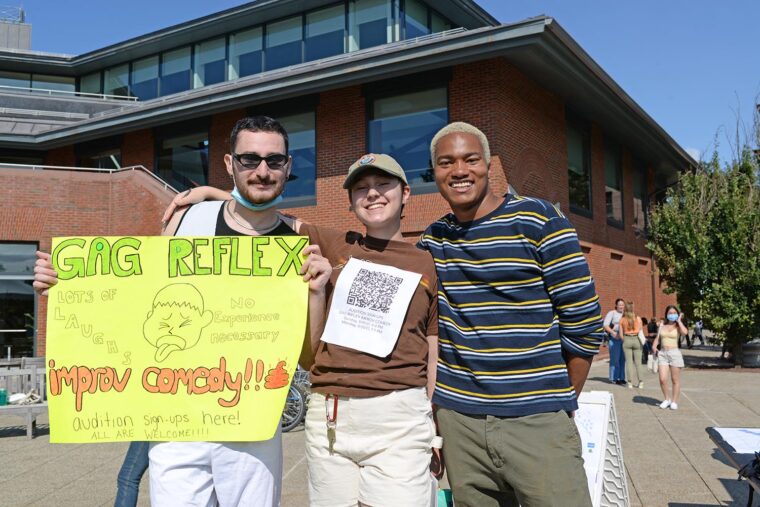
At left, Mfundi Makama '14 and Greg Shaheen ’13 received grants through the Davis Projects for Peace Program.

At left, Mfundi Makama ’14 and Greg Shaheen ’13 received grants through the Davis Projects for Peace Program.

Two Wesleyan students have been awarded grants through the Davis Projects for Peace Program to bring their grassroots project proposals to fruition. Class of 2014′s Mfundi Makama’s $10,000 grant will support The Buddies Program, which he recently created as a way to empower young women in Swaziland through educational achievement. Greg Shaheen ’13 will use the funds to establish a community-based eco-center focused on environmental education and action for teenagers in Lebanon. The projects will take place this summer.

Student applicants at more than 90 Davis United World College Scholar Program partner schools—including Wesleyan—design grassroots projects that promote peace, build understanding, and address the root causes of conflict. The program is funded by internationalist and philanthropist Kathryn Wasserman Davis, who died earlier this year at the age of 106.

Makama, who is from Swaziland, is double majoring in neuroscience and behavior and molecular biology and biochemistry. Though Swaziland is known as the most peaceful country in Africa, its “culture and tradition relegate women to second-class citizens. Such cultural barriers incite abuse in Swaziland and lead to poor law enforcement,” Makama wrote in his project proposal. (more…)

Distinguished scholars from China discussed "Comparative Enlightenments" with Wesleyan faculty during a forum May 9-11 at the Mansfield Freeman Center for East Asian Studies.

Distinguished scholars from China discussed “Comparative Enlightenments” with Wesleyan faculty and other guests during a forum May 9-11 at the Mansfield Freeman Center for East Asian Studies.

(Story contributed by Charles Salas, director of strategic initiatives)

“A golden example of what exchange should be between academic communities in the United States and China.” That’s how Gao Xiang, vice secretary of the Chinese Academy of Social Sciences (CASS) and editor-in-chief of the Social Sciences in China Press, described the Chinese-American Scholarly Exchange Forum that took place May 9-11 at Wesleyan’s Mansfield Freeman Center for East Asian Studies. The forum brought 15 distinguished scholars from China to Wesleyan to meet with American counterparts to discuss the topic of “Comparative Enlightenments.”

The forum was framed by Wang Weiguang, president of CASS, who expressed fervent hopes for this dialogue “between Eastern and Western civilizations as if a lamp is lit by another lamp, as if a dream illuminates another dream, and ultimately illuminates our entire human world.” CASS is far and away the most important center in China for studies in philosophy and the social sciences, and this is the second forum in which they’ve partnered with Wesleyan. The topic of the first forum (held a year and a half ago in Bejing) was “Tradition.” (more…)

Join the Wesleyan community for Reunion & Commencement Weekend 2013.

Join the Wesleyan community for Reunion & Commencement Weekend 2013.

Reunite with classmates, attend WESeminars, tour campus, visit with former professors, and congratulate the Class of 2013 during Reunion & Commencement Weekend May 23-26.

Seniors and their families are invited to join alumni for the traditional Parade of Classes at 11:30 a.m. Saturday, May 25.

Seniors and their families are invited to join alumni for the traditional Parade of Classes at 11:30 a.m. Saturday, May 25.

“Reunion & Commencement is such a fun and celebratory time for the entire Wesleyan community,” said Deana Hutson, director of events for University Relations. “There really is something for everyone. We have more than 150 events planned over the course of three days.”

In addition to another incredible array of WESeminars, Hutson recommends attending the traditional Friday and Saturday night parties, reunion class gatherings, academic department open houses and the Festival on Foss Hill.

On Friday night, alt-rock icon Amanda Palmer ’98 will perform a benefit concert for financial aid (buy tickets here). The weekend culminates with the 181st Commencement Ceremony where campus guests will hear from award-winning writer, director, and producer Joss Whedon ’87.

Other highlights will include several reunion class receptions and dinners, a Red, Black and Green All-College Dinner, stargazing at the Van Vleck Observatory, a volunteer breakfast, a tour of the Freeman Family Garden, a SteveSongs Concert, Thesis Art 2013 Exhibition, a gathering for graduating seniors and their grandparents, Senior Voices, the traditional All-College Sing, the Phi Beta Kappa initiation, Anugerah: Student Performance Showcase, and much more.

WESeminar topics include Approaches to Social Innovation, Wesleyan’s Partnership with Coursera, Mountaintop Removal Mining, the Grateful Dead at Wesleyan, Getting Published, the Art and Science of Mediating Complex Matters, Marriage Equality, the Art of Collaboration, Travel, Protest Posters Today, Hometown Security, Super Frog Saves Tokyo and more.

View the full schedule, by day, at this website.

This year, Wesleyan is expanding its bottled water elimination efforts through a Feet to the Fire: Earth and Justice for All campus initiative. Two student-designed water stations will deliver filtered and chilled water to Reunion & Commencement guests at the All-College Picnic and Commencement Ceremony. Learn more about this and other R&C sustainable efforts online here.

FAQs about R&C Weekend are online here.

Anthony Braxton. (Photo by Jason Guthartz)

Anthony Braxton. (Photo by Jason Guthartz)

Anthony Braxton, the John Spencer Camp Professor of Music, has been honored with the 2013 Doris Duke Artist Award, one of the country’s most prestigious awards for individual artists. It comes with a $225,000 honorarium.

Braxton is a composer, saxophonist, teacher and philosopher with a career spanning half a century. He is also the founder of The Tri-Centric Foundation, a nonprofit that cultivates and inspires the next generation of creative artists to pursue their own visions with the kind of idealism and integrity Braxton has demonstrated throughout his long and distinguished career. The foundation also documents, archives, preserves and disseminates Braxton’s scores, writings, performances and recordings.

According to Mark Slobin, the Winslow-Kaplan Professor of Music, the Doris Duke Artist Award “complements Prof. Braxton’s earlier ‘genius grant’ from the MacArthur Foundation [in 1994], and serves as an ongoing recognition of his unique and long-lasting contribution to the performing arts in America and internationally.” At Wesleyan, Braxton is known for his close mentoring of students, many who have gone on to become prominent figures in the New York music world and abroad, said Slobin.

“As Braxton has signaled that he will retire in December, it seems a particularly timely moment to salute both his current standing and his more than two decades of University service,” he added.

The Doris Duke Artist Awards “invest in exemplary individual artists in contemporary dance, jazz, theatre and related interdisciplinary work who have proven their artistic vitality and commitment to their field,” according to the award website. In addition to an unrestricted monetary award, recipients are also given access to special goal assessment tools, financial and legal counseling, and conferences with peer-to-peer learning opportunities

Artists may not apply for the award. Candidates are selected from a pool of artists who have won at least three national grants, awards, accolades or fellowships in the past 10 years. An anonymous panel of performing arts professionals then review eligible candidates, assessing “the quality of the artist’s work, the maturity of the artistic voice, the value of a grant at this moment in their careers, and the dedication of the artist to continue to move forward with creativity and curiosity.

Jan Naegele is one of 19 women faculty in the country to receive a Drexel Fellowship.

Jan Naegele is one of 19 women faculty in the country to receive a Drexel Fellowship.

Jan Naegele, professor of biology, professor of neuroscience and behavior, was named a 2013-14 ELATE (Executive Leadership in Academic Technology and Engineering) at Drexel® Fellow for the 2013-14 academic year.

Naegele and 18 other women faculty in science, technology, engineering and math fields, received the fellowship. They come from a range of universities and colleges across the country, many with global experience.

The ELATE at Drexel® Fellow program focuses on increasing personal and professional leadership effectiveness, leading and managing change initiatives within their institutions, using strategic finance and resource management to enhance the missions of their organizations, and creating a network of exceptional women. Facilitated by leaders in the fields of science, technology, engineering and math research and leadership development, the curriculum includes classroom lessons and activities, online instruction and discussion, and on-the-job application at each fellow’s home institution.

In addition to learning about the financial planning and resource management in this program, each of the fellows has a project that they develop over the year-long program.

“While continuing the current support structure at the Center for Faculty Career Development, I will also develop new resources for minorities and women faculty, including workshops to assist junior faculty with their teaching and research,” Naegele said. “One topic to be addressed in workshops will focus on survival skills for junior science faculty as they set up their research laboratories, establish funded research programs, and recruit undergraduate and graduate students. Another will be to expand resources and mentoring to recruit and retain underrepresented minorities across the disciplines.”

The work for this second incoming class begins in May with online assignments and community building activities, and the program will conclude in March 2014 with a symposium organized around their projects. Naegele will begin the first of three week-long, in-residence sessions on July 31 at the ACE Conference Center in Lafayette Hill, Pa.

More more information visit Drexel’s website.

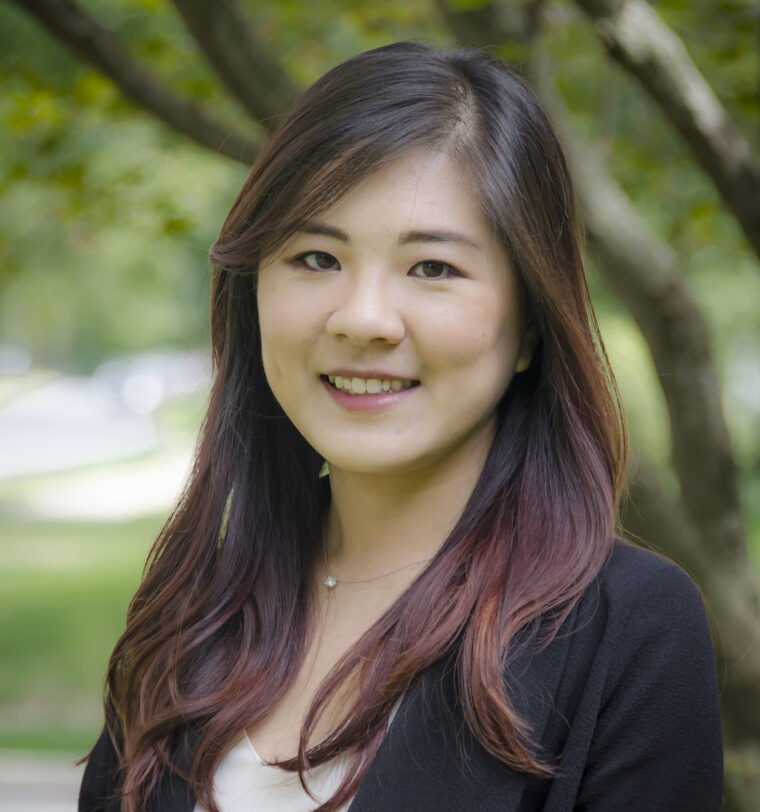
Anna Haensch is one of two mathematicians selected for the prestigious Mass Media Fellowship this year.

Anna Haensch is one of two mathematicians selected for the prestigious Mass Media Fellowship this year.

When Anna Haensch tells new acquaintances that she’s a mathematician, many people immediately recoil.

“There’s this repellent nature to math,” she said. “There’s this big wall up around it—people find it terrifying or uninteresting.”

That’s exactly why Haensch, a Ph.D. student who just successfully defended her dissertation, wants to learn how to communicate better to the general public about math. She is the recipient of a Mass Media Fellowship, administered by the American Association for the Advancement of Science (AAAS). Haensch’s fellowship is sponsored by the American Mathematical Society (AMS). The 10-week summer program, which starts June 3, places graduate and post-graduate level science, engineering and mathematics students at media organizations around the country, where they develop skills to translate their work to the public. Haensch will be stationed at the NPR Science Desk in Washington, D.C.

She was one of two mathematicians selected for the prestigious fellowship this year. Thirteen fellowship recipients in other scientific fields will be stationed at media outlets such as the Chicago Tribune, the Los Angeles Times, NOVA, Scientific American, and WIRED.

Haensch, who earned her undergraduate degree at the State University of New York at New Paltz, has been at Wesleyan for the past six years, working on number theory under Professor of Mathematics Wai Kui Chan.

“I plug integers into polynomials and see what integers I get out,” she explained. “This is a question that’s really easy to ask, but it’s very hard to get our hands on the solution. Over the last several hundred years, this has been a question people have been very interested in.”

After passing her qualifying exams at Wesleyan, Haensch began teaching courses in pre-calculus (more…)

Government major Ivan Stoitzev '13 presented his research on “Everything Revolves Around Oil and Natural Gas: Russia’s Economic and Political Centers of Gravity,” during the Center for the Study of Public Life's 2012-13 thesis research presentations on April 26. Stoitev investigated the role oil and natural gas play in the Russian economy and political sphere.

Government major Ivan Stoitzev ’13 presented his research on “Everything Revolves Around Oil and Natural Gas: Russia’s Economic and Political Centers of Gravity,” during the Center for the Study of Public Life’s 2012-13 thesis research presentations on April 26. Stoitev investigated the role oil and natural gas play in the Russian economy and political sphere.

The Center for the Study of Public Life’s profiled a range of Wesleyan senior thesis research projects on topics related to the study of public life on April 26.

The inaugural event featured 10-minute presentations by Wesleyan seniors whose 2012-13 thesis research represents an undertaking to pursue knowledge about public life in its broad definition.

Three students spoke about the topic “Regionalism, Nationalism, Infrastructures and Identity.”

And history major Sophia Hussain discussed “The Derailed Power Broker: Rexford Tugwell's American Crusade for Planning and Professional Authority,”

History major Sophia Hussain discussed “The Derailed Power Broker: Rexford Tugwell’s American Crusade for Planning and Professional Authority.”

Government major Katherine James spoke on “Policy and Planning for Large Water Infrastructure Projects in the People’s Republic of China,”a study of three water projects – the South-to-North Water Transfer Project, the Three Gorges Dam, and the Nu River Project- that explores how and why China has persisted with a policy of constructing mega-projects to assuage domestic water scarcity and supply issues, in spite of their high social, political, economic, and environmental costs.

Government major Ivan Stoitzev ’13 presented his research on “Everything Revolves Around Oil and Natural Gas: Russia’s Economic and Political Centers of Gravity,” during the Center for the Study of Public Life’s 2012-13 thesis research presentations on April 26. Stoitev investigated the role oil and natural gas play in the Russian economy and political sphere.

And history major Sophia Hussain discussed “The Derailed Power Broker: Rexford Tugwell’s American Crusade for Planning and Professional Authority,” a historical investigation of the agricultural economist’s public writings and his relationship to the New Deal, racial politics, and the building of America’s first Greenbelt Towns in the 1930s.

Four students discussed studies about “Policy and Political Processes.”

College of Social Studies major Caitlin Aylward presented “Food for People, Not for Profit: Justice and the Food Movement,” a study of how the predominant food justice, slow food, and food sovereignty movements are each a response to a respective element within a triad of distributional, recognition based and procedural injustices. (more…)

From left, Nina Gerona '15; Jen Kleindienst, sustainability coordinator; Bruce Strickland, instrument maker specialist; Tavo True-Alcalá '15; Dave Strickland, instrument maker specialist; Brent Packer '15; and Madeleine O’Brien '16 present the student-designed "Wishing Well." The project was constructed by the Machine Shop inside Wesleyan's Scientific Support Services.

From left, Nina Gerona ’15; Jen Kleindienst, sustainability coordinator; Bruce Strickland, instrument maker specialist; Tavo True-Alcalá ’15; Dave Strickland, instrument maker specialist; Brent Packer ’15; and Madeleine O’Brien ’16 present the student-designed “Wishing Well.” The project was constructed by the Machine Shop inside Wesleyan’s Scientific Support Services.

As a part of its commitment to be a bottled water-free campus, Wesleyan is continually seeking alternatives to hydrate the campus community.

During Reunion & Commencement, May 23-26, a group of students will debut their sustainable solution, “The Wishing Well,” a custom-built mobile water station. The two-piece water tank, constructed by Wesleyan’s Scientific Support Services, features eight water filtration dispensers. On May 25, the stations will be positioned on Andrus Field, and on May 26, near North College. The stations will dispense filtered water from the public water supply.

The students, Nina Gerona ’15; Tavo True-Alcalá ’15; Brent Packer ’15; and Madeleine O’Brien ’16, received a shared $1,000 prize on May 8 for their design, which won a competition sponsored by the Sustainability Office, Center for the Arts’ Feet to the Fire Initiative, the Patricelli Center for Social Entrepreneurship, and the College of the Environment. The water station also will be used at Homecoming/Family Weekend, and other outdoor events.

Kleindienst and True-Alcalá  presented the design contest to sustainability professionals from across the U.S. at the Smart and Sustainable Campuses Conference, held in Bethesda, M.D.

During R&C weekend, Wesleyan will provide campus guests with the reusable water bottles. During Commencement, one will be placed under each attendee’s seat.

Read a Hartford Business Journal article on the water filtration systems online here.


Twenty-three colleges and universities in New England, including Wesleyan, have joined an EPA effort to cut the amount of food that goes to waste. This doubles the participation of EPA’s Food Recovery Challenge in 2013, since 11 New England colleges and universities were already participating in the challenge. In 2011, these schools recovered a total of 4,538 tons of food.

The partnership, which was announced in honor of Earth Day, aims to reduce the 1.64 million tons of food wasted each year in the six New England states. EPA’s Food Recovery Challenge, encourages organizations to reduce, donate, and recycle as much of their excess food as possible, which saves money, feeds the needy, and helps protect the environment–the triple bottom line. By joining the challenge, Wesleyan pledges to reduce food waste disposed on campus.

“The EPA Food Recovery Challenge will help us to benchmark our food waste and increase recovery of food through expanded food donation, composting, and other initiatives,” said Jen Kleindienst, sustainability coordinator. “We’re excited to be a part of this effort and look forward to working with Bon Appetit and the campus community to make this great.”

Last year, Wesleyan composted about 3.5 tons of pre-consumer food waste.

Last year, Wesleyan composted about 3.5 tons of pre-consumer food waste.

Wesleyan is already undertaking a number of efforts to reduce food waste. Last year, the university composted about 3.5 tons of pre-consumer food waste from Usdan University Center and student residences. This year, the pre-consumer program has collected nearly 5 tons.

Additionally, in March, Wesleyan began composting all post-consumer food waste in Usdan Marketplace.

“In its first month, we have diverted nearly 5 tons of food scraps from the incinerator,” Kleindienst said. “If this program continues to be successful, the Sustainability Office hopes to expand it to other campus dining locations.”

Food Rescue, a Wesleyan student group, strives to reduce the amount of food regularly wasted and thrown out in campus dining halls and reallocate it to those who suffer from hunger and homelessness in the Middletown community. Student volunteers collect food that is normally wasted from Pi Cafe, Summerfields, and Usdan and take it to Eddy Shelter.

Students also organize, prepare and participate in community dinners at the shelter.

James Kellner of Verona, N.J. attended WesFest with his mother, Michele Kellner, and grandmother, Maria Montoto.

James Kellner of Verona, N.J. attended WesFest with his mother, Michele Kellner, and grandmother, Maria Montoto.

More than 500 admitted students and their families descended on Wesleyan’s campus for WesFest, the annual celebration of all things Wesleyan. Between Wednesday, April 17 and Friday, April 19, they were treated to dozens of tours, panels, lectures and demonstrations to acquaint them with Wesleyan’s academics, student organizations, athletics and facilities.

On Friday around noon, the sun came out and visitors took a break to enjoy a barbecue lunch on Foss Hill while a student band played.

Admitted student Cloie Logan of Albuquerque, N.M. visited Wesleyan with her parents, Nina Logan and Jimmy Miranda.

Admitted student Cloie Logan of Albuquerque, N.M. visited Wesleyan with her parents, Nina Logan and Jimmy Miranda. (Photos by Olivia Drake)

Cloie Logan and her parents came all the way from Albuquerque, N.M. Cloie fell in love with Wesleyan after visiting as a high school junior, and was accepted early decision I.

“Basically since December, I’ve been aching to be here,” she said. At WesFest, she said, “I ate a lot of really delicious food, went to a comedy show, saw Prometheus, went to a few department office hours, and visited the Argus,” where she hopes to work as a student.

James Kellner of Verona, N.J. also was admitted early decision. He visited Wesleyan with his mother and grandmother, and met with the coach of the wrestling team, which he plans to join. He plans to study economics.

“I like it a lot. I like the people, the diversity,” he said. “Just the vibe here—it’s relaxed and easygoing.”

Accompanied by her parents and younger sister, Anne Chen of New York City had heard President Michael Roth speak earlier in the day, and took a tour. Her initial impressions of Wesleyan: “It’s really friendly and open. It’s a really supportive community. People seem really creative.”

Malaysia Johnson of Prince Frederick, M.D. visited with her mother and grandmother. After attending a student-to-student panel, she said, “I was impressed with how active the students at Wesleyan are with volunteering and things like that.”

Malaysia Johnson of Prince Frederick, M.D. attended a student-to-student panel and was impressed by how active Wesleyan students are in community service. She is pictured with her mother, Glenda Johnson, and her grandmother, Delois Johnson.

Malaysia Johnson of Prince Frederick, M.D. attended a student-to-student panel and was impressed by how active Wesleyan students are in community service. She is pictured with her mother, Glenda Johnson, and her grandmother, Delois Johnson.

Jackson Dumont of Albany, N.Y. attended a class on astronomy, which he found, “really interesting.”

“I like all the different academic opportunities available to me at Wesleyan,” he said.

Lucy Salwen of Amherst, Mass. visited with her mother. She sat in on an environmental science class, stayed overnight with a current student host, saw a performance by Prometheus—“That was really cool. A little scary.”—and attended a co-ed ultimate Frisbee team practice.

“I’ve been walking around campus and seeing the same faces again. It seems like a nice size,” she said.

VIDEOS and PHOTOS of the event are below. View the complete WesFest photo gallery on the Wesleyan Flickr page(more…)

Wesleyan President Michael S. Roth signed an agreement between Wesleyan and Vermont Law School that guarantees admission for College of the Environment graduates meeting GPA and LSAT thresholds into Vermont's Environmental Law Program. At left, Sonia Mañjon, vice president for institutional partnerships and chief diversity officer, and at right, Barry Chernoff, director of College of the Environment, accompanied President Roth at the signing on April 3.

Wesleyan President Michael S. Roth signed an agreement between Wesleyan and Vermont Law School that guarantees admission for College of the Environment graduates meeting GPA and LSAT thresholds into Vermont’s Environmental Law Program. At left, Sonia Mañjon, vice president for institutional partnerships and chief diversity officer, and at right, Barry Chernoff, director of College of the Environment, accompanied President Roth at the signing on April 3.

Thanks to a new partnership, graduates from Wesleyan’s College of the Environment who meet certain academic standards will be guaranteed admission to Vermont Law School’s prestigious JD (Juris Doctor/Doctor of Law), JD/master’s or master’s degree programs. Vermont’s Environmental Law Program, the largest in the country, is widely considered to be one of the best environmental law programs in the United States.

President Michael S. Roth signed the agreement between Wesleyan and Vermont Law School on Wednesday, April 3.

“We’re excited to provide this option for students in the College of the Environment to take their interdisciplinary exploration of environmental issues to the next level through advanced study of the law, policy and regulation,” said Roth. “The COE was conceived of as a place where scholars can think about translating their research into action in the public sphere. Vermont Law School offers superb programs in environmental law and policy. Earning a JD or master’s degree there certainly will empower our graduates to make an even greater difference in the world.”

“We are delighted to sign this agreement with Wesleyan University and look forward to welcoming qualified graduates from its College of the Environment to the Master’s and the JD degrees offered at Vermont Law School,” said Marc Mihaly, President and Dean of Vermont Law School. “Students from Wesleyan fit the profile of our most successful students – they are smart and committed to making a difference in their communities and, indeed, in the world.”

“In my mind, Vermont Law School is the premier school for environmental law in the country,” remarked Barry Chernoff, director of College of the Environment and Robert Schumann Professor of Environmental Studies. “Pursuing further study in environmental policy, regulation and law will enable our students to influence critical environmental issues facing our country—and the world—over the next century.”

Under the agreement, graduates of Wesleyan’s College of the Environment will be guaranteed admission, with a waiver of all application fees, into Vermont Law School’s JD, Master in Environmental Law and Policy (MELP), or Master in Energy Regulation and Law (MERL) programs. Qualified applicants must complete all requirements to earn a Bachelor’s degree from Wesleyan; complete a minimum of 15 credits for a JD, or 16 credits for a master’s, at Wesleyan; have a cumulative grade point average of 3.2 or higher; earn an LSAT score of 150 or higher for the JD; and present a letter of recommendation from the director of the College of the Environment. The agreement applies to those who have graduated from Wesleyan within four years.

College of the Environment students are especially well-prepared to pursue this type of work after graduation, said Chernoff, because Wesleyan requires them to do their primary scholarship in a particular discipline, and then examine environmental issues from multiple lenses for the Environmental Studies linked major. Majors are also required to complete a capstone project on an environmental topic, principally from the perspective of their primary major, which offers good practice in real world environmental research. The emphasis on critical thinking from an interdisciplinary perspective, which takes into account the viewpoints of all stakeholders, gives “our students a great basis for doing environmental policy work in the future,” Chernoff said.

He added that a significant number of COE graduates currently go on to earn law degrees. Current students he consulted about a partnership with Vermont Law School gave universally positive feedback.

Chernoff said he has, and will continue, to promote the partnership among faculty, students, alumni and prospective students. “I really think it’s important for young people to have interesting opportunities available to them after graduation, and for Wesleyan to provide gateways for students into careers,” he said.

In addition, Chernoff is exploring the development of other partnerships to provide COE students with different avenues for post-graduate education in areas such as public health, environmental management, sustainability and sustainable design.

Richard Grossman, professor of economics.

Professor of Economics Richard Grossman has been named a 2013 Guggenheim Fellow. He will work on a project about the evolution of banking regulation across the industrialized world.

Awarded by the John Simon Guggenheim Memorial Foundation, the fellowship assists research and artistic creation “for men and women who have already demonstrated exceptional capacity for productive scholarship or exceptional creative ability in the arts.” This year, 175 scholars, artists and scientists were selected to receive fellowships from a group of almost 3,000 applicants from the U.S. and Canada.

“The Guggenheim Foundation has been giving awards to distinguished scholars and artists for nearly 90 years, including Nobel laureates, Pulitzer Prize winners, a winners of a host of other important awards. It is an honor to be in such company,” said Grossman. “It is particularly meaningful to be the only member of the 2013 class of Guggenheim Fellows who is an economist.”

Describing his project, Grossman said, “I will be looking in particular at how historical evolution affects current day banking regulation—what those in the business call, ‘path dependence.’ So, for example, if California had particularly liberal banking laws (eg. Easy entry into banking, a minimum of restrictions on how banks can conduct business) in the 19th century, and if Connecticut had particularly stringent laws (eg. High barriers to entry, many restrictions on banking operations), how likely is it that the relative stringency of their laws will remain today?”

He added, “I am excited about this research. When banks work well, they contribute to economic prosperity; when they don’t, things can go very wrong. This research will help identify which regulatory regimes have been conducive to economic growth and stability and which have not. I hope that the results will provide guidance to policy makers in the U.S., Europe, and Japan who are currently crafting new regulations.” (more…)

Next »