
 Olivia Drake
Jennifer Tucker, associate professor of history, is the author and co-author of several new publications. They include: "A View of the Ocean, Between the Tropics (1765–1800),” published in Britain in the World: Highlights from the Yale Center for British Art by Yale University Press, 2019. “Popularizing the Cosmos: Pedagogies of Science and Society in Anton Pannekoek’s Life and Work,” published in Anton Pannekoek: Ways of Viewing Science and Society by Amsterdam University Press, 2019. (more…)

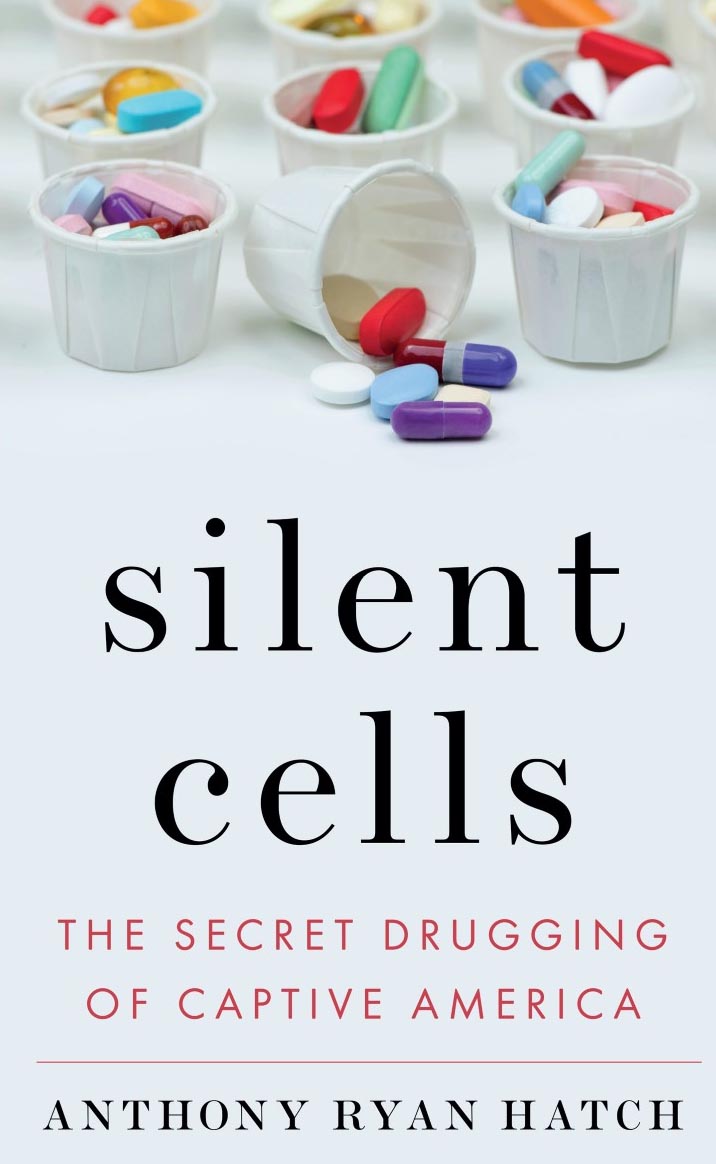
Anthony Ryan Hatch, chair and associate professor of science in society, is the author of Silent Cells: The Secret Drugging of Captive America, published by the University of Minnesota Press in 2019. The book offers a critical investigation into the use of psychotropic drugs to pacify and control inmates and other captives in the vast US prison, military, and welfare systems. According to the publisher: Anthony Ryan Hatch demonstrates that the pervasive use of psychotropic drugs has not only defined and enabled mass incarceration but has also become central to other forms of captivity, including foster homes, military and immigrant…
 Lauren Rubenstein
Associate Professor of Science in Society Anthony Ryan Hatch is the author of a new book, Silent Cells: The Secret Drugging of Captive America, published on April 30 by University of Minnesota Press. The book is a critical investigation into the use of psychotropic drugs to pacify and control inmates and other captives in the vast U.S. prison, military, and welfare systems. According to the publisher: "For at least four decades, U.S. prisons and jails have aggressively turned to psychotropic drugs—antidepressants, antipsychotics, sedatives, and tranquilizers—to silence inmates, whether or not they have been diagnosed with mental illnesses. In Silent Cells, Anthony Ryan…
Wesleyan faculty frequently publish articles based on their scholarship in The Conversation US, a nonprofit news organization with the tagline, “Academic rigor, journalistic flair.” In a new article, Associate Professor of History Jennifer Tucker explores our ongoing romance with the gas lamp in connection with the new Mary Poppins film. Tucker is also associate professor and chair, feminist, gender, and sexuality studies; associate professor, science in society; and associate professor, environmental studies. In 'Mary Poppins Returns,' an ode to the gas lamp “Mary Poppins Returns” transports audiences back to 1930s London. The beloved nanny at the center of the original 1964…
 Cynthia Rockwell
(more…)

Wesleyan faculty frequently publish articles based on their scholarship in The Conversation US, a nonprofit news organization with the tagline, "Academic rigor, journalistic flair." Lori Gruen, the William Griffin Professor of Philosophy, has written a piece explaining how philosophers determine what is the right, or ethical, thing to do. Gruen also is professor of feminist, gender and sexuality studies, professor of science in society, and coordinator of animal studies. Read her bio in The Conversation. How should we decide what to do? How many times do we wonder, "What’s the right thing to do?" Most of us are faced with ethical…

In this recurring feature in The Wesleyan Connection, we highlight some of the latest news stories about Wesleyan and our alumni. Recent Wesleyan News 1. President Michael Roth publishes op-eds in The Washington Post titled, "We can't let cynics ruin college," and "What is college for? (Hint: It's not just about getting in.)." He also sat for an "On Leadership" interview with The Chronicle of Higher Education. 2. The Conversation: "The dangerous belief that white people are under attack" Assistant Professor of Psychology Clara Wilkins writes about her research on perceptions of reverse discrimination in light of recent societal trends. 3. Marketplace: "Here comes the tax bill…
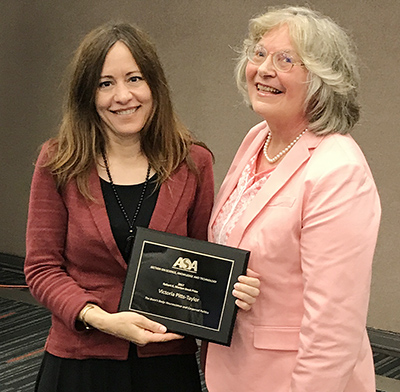
Professor of Feminist, Gender and Sexuality Studies Victoria Pitts-Taylor, pictured at left, received the Robert K. Merton Award for her book, The Brain's Body: Neuroscience and Corporeal Politics (Duke University Press, 2016). The award was presented at a meeting of the Science, Knowledge, and Technology Section of the American Sociological Association in Montreal, Canada on Aug. 14. The Merton Award is given annually in recognition of an outstanding book on science, knowledge, and/or technology published during the preceding three years. The Brain's Body previously won the 2016 prize in Feminist Philosophy of Science given by the Women's Caucus of the Philosophy of Science Association.…

Professor of Religion Mary-Jane Rubenstein was a guest on WNYC's "Studio 360" recently, in a show titled, "The Theoretical Physicist Wore a Toga." She addressed existential "what if" questions and the idea of multiple universes—an idea, she explains, which "is about 2,500 years old." "For the ancient Atomist philosophers [in Ancient Greece], the most desirable thing about what we're now calling the multiverse was that it got rid of the need for a god. If it is the case that our world is the only world, then it's very difficult to explain. How is everything so perfect? How is it that sunsets so beautiful?" she said. "What…
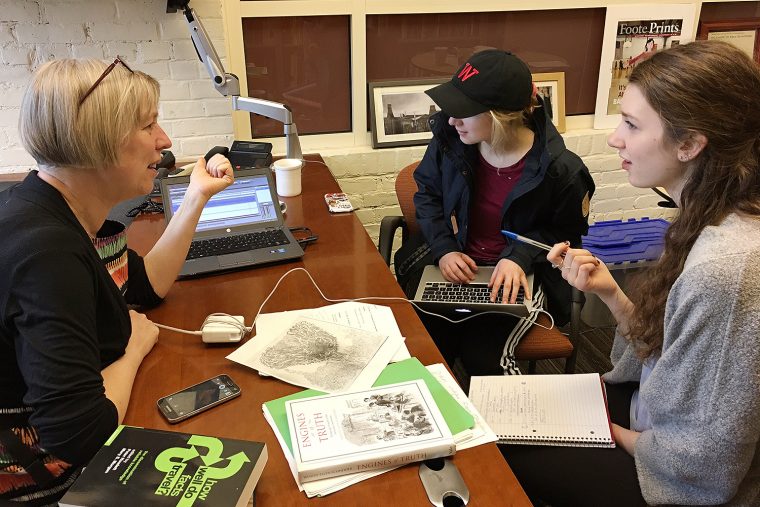
This year, students in Associate Professor of History Jennifer Tucker’s class, Seeing a Bigger Picture: Integrating Visual Methods and Environmental History, had an opportunity to share what they learned in an unusual format. They produced an hour-long radio program, which debuted on WESU 88.1 FM on Memorial Day. It will air again on the station this summer, and can be heard on wesufm.org or on SoundCloud. The course introduces students to key landmarks in the visual history of environmentalism and environmental science, from the 18th century to the recent past. The class studies the power and the limits of visual…
Professor of Religion Peter Gottschalk recently authored an article, "Who are the Sufis and why does ISIS see them as threatening," which appeared on Raw Story and The Conversation. The Sufis, who have been the target of violent attacks in Pakistan in recent years, practice austerity "stemming from a sincere religious devotion that compelled the Sufi into a close, personal relationship with God, modeled on aspects of the Prophet Muhammad's life. This often involved a more inward, contemplative focus than many other forms of Islamic practice." And, according to Gottschalk, though "many Muslims and non-Muslims around the globe celebrate Sufi saints…
The pseudoscientific myths about love and sexuality that abounded in the Victorian era, many of which seem "cruel and oppressive" by today's standards, could also offer women relief from the era's "rigid gender politics," according to Associate Professor of History Jennifer Tucker, who comments on the topic for a Broadly article. For much of the 19th century, the Western world was fascinated with a variety of pseudosciences, or theories that lack a basis in the scientific method. "Definitions of science were malleable and hotly contested in the 19th century," said Tucker, who is also associate professor of science in society, associate professor…