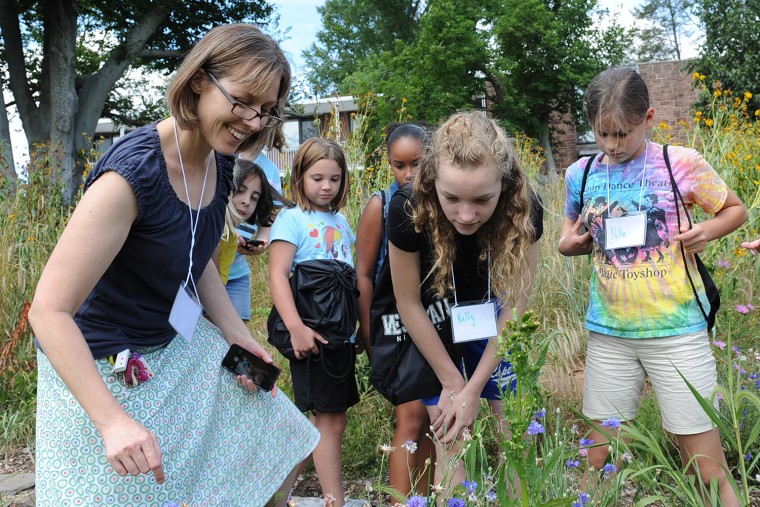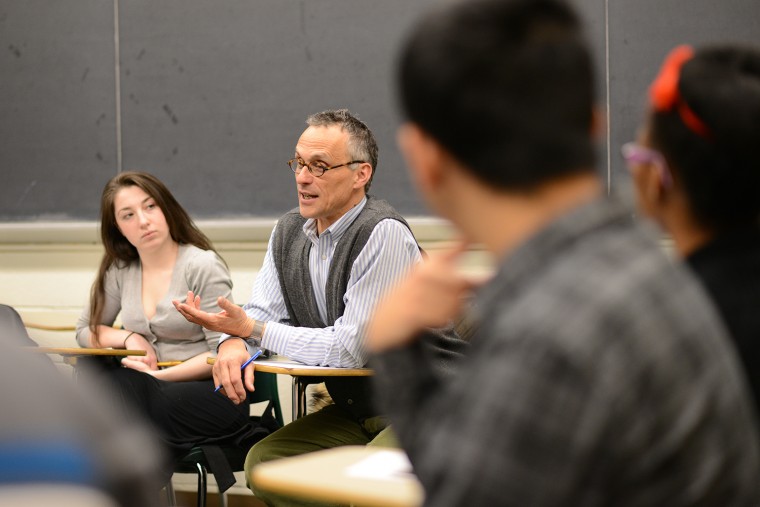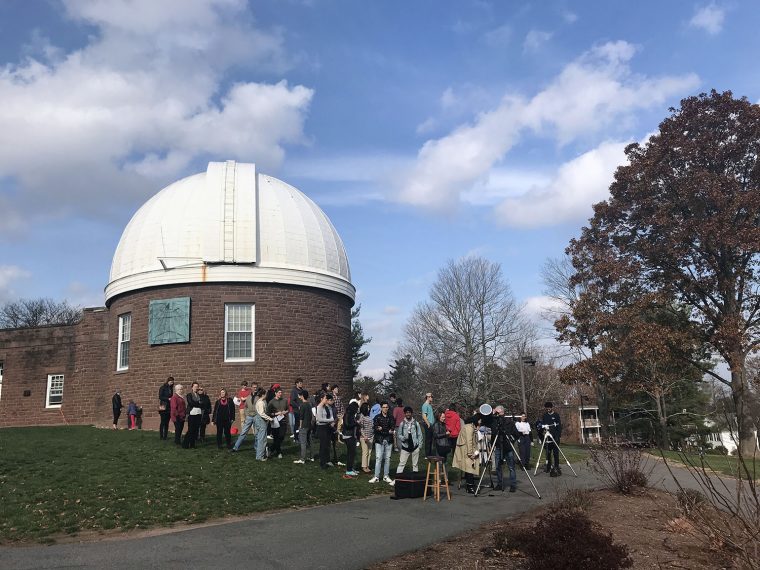
Michael Singer, assistant professor of biology, taught a workshop on "Biodiversity in Connecticut and Beyond" during the Middletown Minds in Motion program March 21 at Snow Elementary School. Singer taught participants about natural history and the biologically diverse animals that inhabit Connecticut ecosystems, focusing on insects, reptiles and amphibians.

Ishita Mukerji, professor of molecular biology and biochemistry, taught a workshop titled "Who Done It? A DNA Investigation."
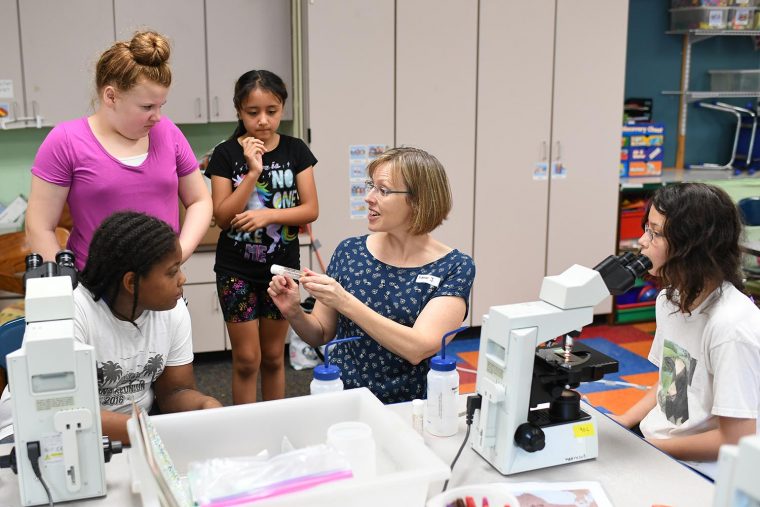
During a “Who Done It? A DNA Investigation,” elementary school aged children sported white lab coats and became “detectives” hoping to solve a crime.
The students learned about DNA structure by isolating DNA from wheat germ and comparing DNA samples from a ‘crime scene’ with the DNA from five suspects. They learn how DNA forensics actually works – just like on the television show “CSI.” (more…)

Laura Grabel.
Laura Grabel, the Lauren B. Dachs Professor of Science in Society, was one of three guests featured on PBS’s “Where We Live” on March 23. Grabel joined scientists and ethicists from all over the country for StemCONN 2009—an international stem cell research symposium held in New Haven, Conn. The symposium organizers and experts spoke on what new federal policy means for a state like Connecticut, which has already heavily invested in stem cell research.
Connecticut is home to leading academic institutions for human stem cell research, including Wesleyan, Yale University, the University of Connecticut. It is a place where national and international stem cell research partnerships develop, thrive and grow.
During StemCONN, Grabel, chair of the StemCONN organizing committee, provided an up-to-the-minute report on the achievements of Connecticut’s research institutions and the State of Connecticut’s Stem Cell Research Fund. Her current research interests include a study of the ability if GABAergic neurons derived from embryonic stem cells to prevent chronic seizures when transplanted to the mouse hippocampus, and a study examining the molecular signals that direct production of neural stem cells from embryonic stem cells and the environmental conditions, following seizures, that promote integration of embryonic stem cell-derived neural stem cells.

Lori Gruen.
Lori Gruen, associate professor of philosophy, associate professor feminist, gender and sexuality studies, and director of the Ethics in Society Project was also on the organizing committee for StemCONN. Gruen is chair of the Embryonic Stem Cell Research Oversight committee. Her work lies at the intersection of ethical theory and ethical practice and she has published on multiple topics in bioethics, environmental ethics, and other areas of practical ethical concern.
Recently, she co-edited Stem Cell Research: The Ethical Issues (Blackwell, 2007) with Grabel and Peter Singer.
Posted in Snapshots on Oct. 20, 2008 by Olivia Bartlett Drake

At left, Tresne Hernandez '12 and Ross Firestone '12 demonstrate how to blow up a balloon with baking soda and vinegar by producing carbon dioxide. The students are part of the Chemistry Department's Free Radicals group, which participated in the Muslim Coalition of Connecticut’s Eid ul-Fitr Carnival to commemorate the end of Ramadan in October. Eid ul-Fitr is one of two major lunar festivals in the Islamic calendar.
(more…)
Posted in People on Oct. 6, 2008 by Olivia Bartlett Drake

Andrew Klein, science librarian, acts as the liaison between the libraries and the NSM faculty, conducts personal research sessions with science students, and teaches information literacy sessions for science classes. (Photo by Olivia Bartlett)
Q: Andrew, you are Wesleyan’s new science librarian. What can you tell us about the library?
A: We have nearly 200,000 books and thousands of online journals on every science topic imaginable. With a great study environment and a friendly, helpful staff, the Science Library is the best place to go for science information! (more…)
Wesleyan is mentioned in an Oct. 5 New London, Conn. The Day article titled “Nature Reclaims What Damn Had Taken.” According to the article, Wesleyan scientists are helping the Connecticut Nature Conservancy lead a long-term research project at the state’s East Branch of the Eightmile River Zemko dam site to monitor the changes that take place after dam removal. The research involves tracking the new plant life, collecting samples of the fish found in the river, examining the contents of fish stomachs to learn what they’re eating, and recording the river’s geomorphology – the changes in the course it follows. Read more at here.