Feed on
Posts
Comments

Tag Archive 'faculty'

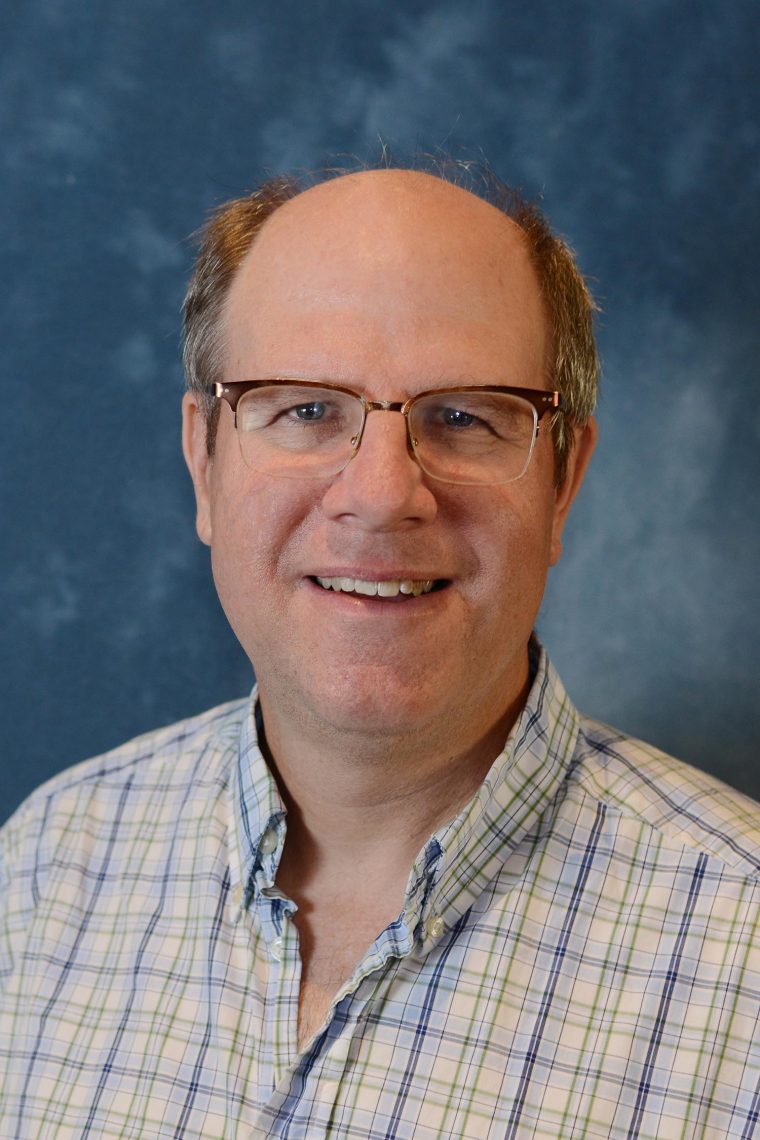
Mary Alice Haddad says that the election of the Democratic Party of Japan, and more particularly the relegation of the long-dominant Liberal Democratic Party to opposition status, promises to shake up long-standing political patterns in that country.

Mary Alice Haddad says that the election of the Democratic Party of Japan, and more particularly the relegation of the long-dominant Liberal Democratic Party to opposition status, promises to shake up long-standing political patterns in that country. (Photo by Stefan Weinberger '10)

The candidate for issue’s “5 Questions with…” is Mary Alice Haddad, assistant professor of government, assistant professor of East Asian studies. She provides some insight into the recent, dramatic change in the Japanese government.

Q: What are your primary areas of study and research?

MAH: My primary area of research has been on civil society and democracy with a focus on Japan. I am beginning a new research project on environmental politics in East Asia. I am particularly interested in the ways that local politics around environmental issues can lead toward greater citizen participation in democratic as well as nondemocratic countries.

Q: How did you become interested in these areas?

MAH: I have been fascinated by the differences in the ways that Japanese and Americans experience democracy in different ways in their local communities and what that means for our broader understandings of democracy and democratic development.

Q: How significant are the recent changes in the Japanese government?

MAH: Extremely significant. Japanese politics has been undergoing profound transformation over the past two decades, and the election of the (more…)

Anne Greene, director of Writing Programs, adjunct professor of English, introduces the Writing Programs' Fall Faculty Reading series Sept. 23 in Russell House.

Anne Greene, director of Writing Programs, adjunct professor of English, introduces the Writing Programs' Fall Faculty Reading series Sept. 23 in Russell House.

Deb Olin Unferth, assistant professor of English, reads from her work. Unferth is the author of a collection of stories, Minor Robberies, and a novel, Vacation, both published by McSweeney’s. Her work has appeared in Harper’s, 3rd Bed, Fence, and other publications. She has received a Pushcart Prize, a Creative Capital Grant from the Warhol Foundation, and in 2009 the Cabell First Novelist Award.

Deb Olin Unferth, assistant professor of English, reads from her work. Unferth is the author of a collection of stories, Minor Robberies, and a novel, Vacation, both published by McSweeney’s. Her work has appeared in Harper’s, 3rd Bed, Fence, and other publications. She has received a Pushcart Prize, a Creative Capital Grant from the Warhol Foundation, and in 2009 the Cabell First Novelist Award.

Poetry and nonfiction by Lisa Cohen, assistant professor of English, have appeared in numerous journals, including Ploughshares, Lit, Barrow Street, GLQ, Fashion Theory, Bookforum, The Boston Review, and Voice Literary Supplement. She is currently completing a group biography of three early 20th century figures—the fashion professional Madge Garland, the fan and collector Mercedes de Acosta, and the eccentric scholar Esther Murphy.

Poetry and nonfiction by Lisa Cohen, assistant professor of English, have appeared in numerous journals, including Ploughshares, Lit, Barrow Street, GLQ, Fashion Theory, Bookforum, The Boston Review, and Voice Literary Supplement. She is currently completing a group biography of three early 20th century figures—the fashion professional Madge Garland, the fan and collector Mercedes de Acosta, and the eccentric scholar Esther Murphy.

Elizabeth Willis, the Shapiro-Silverberg Associate Professor of Creative Writing, is the author of four books of poetry, Second Law, The Human Abstract, Turneresque, and Meteoric Flowers. Her work has been selected for the National Poetry Series and her awards include the Boston Review Prize, an award from the Howard Foundation, a Walter N. Thayer Fellowship for the Arts, and a grant from the California Arts Council.  (Photos by Stefan Weinberger '10)

Elizabeth Willis, the Shapiro-Silverberg Associate Professor of Creative Writing, is the author of four books of poetry: Second Law, The Human Abstract, Turneresque, and Meteoric Flowers. Her work has been selected for the National Poetry Series and her awards include the Boston Review Prize, an award from the Howard Foundation, a Walter N. Thayer Fellowship for the Arts, and a grant from the California Arts Council. (Photos by Stefan Weinberger '10)

To view upcoming guest speakers go to:
http://newsletter.blogs.wesleyan.edu/2009/09/22/writing-programs-announces-fall-faculty-readings/

Rich Olson, assistant professor of molecular biology and biochemistry, is teaching a class on membrane properties, structural techniques and protein structure analysis.

Rich Olson, assistant professor of molecular biology and biochemistry, is teaching a class on membrane properties, structural techniques and protein structure analysis.

Rich Olson joined the Department of Molecular Biology and Biochemistry as an assistant professor.

Olson is an expert on X-ray crystallography and biophysical characterization of soluble/membrane proteins. He specifically studies the structure and function of membrane proteins in the nervous system, immunological molecules in the nervous system and structural biology of pathogen virulence factors.

This semester, he is teaching a course titled “Receptors, Channels, and Pumps: Advanced Topics in Membrane Protein Structure and Function,” and an individual undergraduate research tutorial.

When applying to Wesleyan, Olson says he was looking for an institution that would provide a balance between teaching and research.

“Wesleyan has a tradition of strong undergraduate education as well as a vibrant graduate program essential to supporting my research,” Olson says. “Having the graduate program allows me to tackle advanced research (more…)

Manju Hingorani, associate professor of molecular biology and biochemistry, speaks on DNA mismatch repair during the 10th annual Molecular Biophysics Program Sept. 24 at Wadsworth Mansion in Middletown. More than 70 students and faculty attended the day-long event.

Manju Hingorani, associate professor of molecular biology and biochemistry, speaks on DNA mismatch repair during the 10th annual Molecular Biophysics Program Sept. 24 at Wadsworth Mansion in Middletown. More than 70 students and faculty attended the day-long event.

Wilma Olson, the Mary I. Bunting Professor of Chemistry at Rutgers University, was the keynote speaker. She spoke about DNA Mechanics and Regulation. Olson is an expert on the influence of chemical architecture on the structure and properties of nucleic acids.

Wilma Olson, the Mary I. Bunting Professor of Chemistry at Rutgers University, was the keynote speaker. She spoke about DNA Mechanics and Regulation. Olson is an expert on the influence of chemical architecture on the structure and properties of nucleic acids.

At left, Michael Weir, director of the Hughes Program in the Life Sciences, professor of biology, and in center, Brian Northrop, assistant professor of chemistry, listen to Olson's presentation.

At left, Michael Weir, director of the Hughes Program in the Life Sciences, professor of biology, and in center, Brian Northrop, assistant professor of chemistry, listen to Olson's presentation.

Northrop also delivered a talk during the retreat titled 'Dynamic self-assembly as a route to new organic materials.'

Northrop also delivered a talk during the retreat titled 'Dynamic self-assembly as a route to new organic materials.'

During a poster session, molecular biology and biochemistry graduate student F. Noah Biro explains his DNA mismatch repair research titled "Developing Reporter Systems to Monitor the Structural Dynamics of MutS." Biro's faculty advisor is Manju Hingorani.

During a poster session, molecular biology and biochemistry graduate student F. Noah Biro explains his DNA mismatch repair research titled "Developing Reporter Systems to Monitor the Structural Dynamics of MutS." Biro's faculty advisor is Manju Hingorani.

Laurel Appel, director of the McNair Program, adjunct associate professor of biology, senior research associate, listens to Biro explain his research.

Laurel Appel, director of the McNair Program, adjunct associate professor of biology, senior research associate, listens to Biro explain his research.

Olson mingled with students during the Poster Session.

Olson mingled with students during the Poster Session.

Chemistry graduate student Daniel Czyzyk, center, explains his research titled "Heptosyltransferase I and its Role in Biofilm Formation." Czyzyk's advisor is Erika Taylor, assistant professor of chemistry.

Chemistry graduate student Daniel Czyzyk, center, explains his research titled "Heptosyltransferase I and its Role in Biofilm Formation." Czyzyk's advisor is Erika Taylor, assistant professor of chemistry.

David Beveridge, the University Professor of the Sciences and Mathematics, professor of chemistry, reads through the program schedule.

David Beveridge, the University Professor of the Sciences and Mathematics, professor of chemistry, reads through the program schedule.

Chemistry graduate student Sattanathan Paramasivan talks about his research titled "A mix and measure fluorescence screening assay for the exploration of selective quadruplex binders." Paramasivan's advisor is Philip Bolton, professor of chemistry.

Chemistry graduate student Sattanathan Paramasivan talks about his research titled "A mix and measure fluorescence screening assay for the exploration of selective quadruplex binders." Paramasivan's advisor is Philip Bolton, professor of chemistry.

Rich Olson, assistant professor of molecular biology and biochemistry, speaks on "Poring over the structural basis of Vibro cholerae cytolysin assembly."

Rich Olson, assistant professor of molecular biology and biochemistry, speaks on "Poring over the structural basis of Vibro cholerae cytolysin assembly."

Chemistry Department research assistant Elizabeth Wheatley, right, speaks to Olga Buzovetsky '10, about her research titled "A Molecular Dynamics Study of DNA Bending in the Integration Host Factor-DNA Complex." The complex of the protein IHF with oligometric DNA results in a highly-unusual structure in which the DNA is bent by nearly 180 degrees. Wheatley's advisor is David Beveridge.

Chemistry Department research assistant Elizabeth Wheatley, right, speaks to Olga Buzovetsky '10, about her research titled "A Molecular Dynamics Study of DNA Bending in the Integration Host Factor-DNA Complex." The complex of the protein IHF with oligometric DNA results in a highly-unusual structure in which the DNA is bent by nearly 180 degrees. Wheatley's advisor is David Beveridge.

Molecular biology and biochemistry graduate student Yan Li explains her research titled "Investigation of the Binding Interaction of S. cerevisiae MutS homologs MSH2-MSH6 and MSH4-MSH5 with Holliday Junctions." Yan's advisors are Ishita Mukerji, chair and professor of molecular biology and biochemistry, and Manju Hingorani. (Photos by Olivia Bartlett Drake and Manju Hingorani)

Molecular biology and biochemistry graduate student Yan Li explains her research titled "Investigation of the Binding Interaction of S. cerevisiae MutS homologs MSH2-MSH6 and MSH4-MSH5 with Holliday Junctions." Yan's advisors are Ishita Mukerji, chair and professor of molecular biology and biochemistry, and Manju Hingorani. (Photos by Olivia Bartlett Drake and Manju Hingorani)

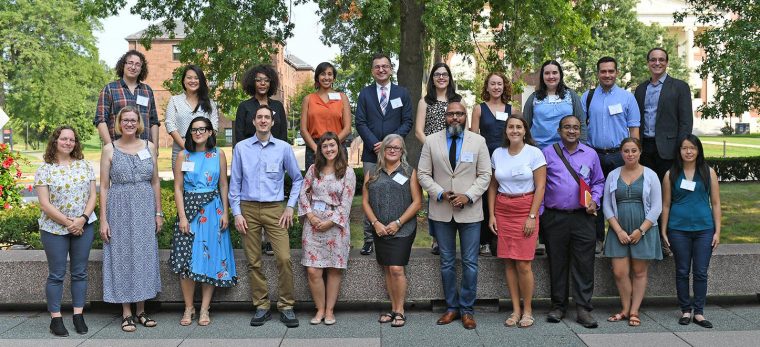
Wesleyan welcomes 19 newly-hired tenured faculty, tenure-track faculty and adjunct faculty for the 2009-10 academic year.

Robyn Autry joined the Sociology Department as assistant professor. She studies the sociology of race and ethnicity, political sociology, comparative historical sociology, institutions, sociology of science and technology and cultural sociology. Autry has a Ph.D. and Master of Arts from the University of Wisconsin, and a Bachelor of Arts from the University of Colorado, Boulder.

Javier Castro-Ibaseta joins the History Department and the College of Letters as assistant professor. Castro-Ibaseta studies early modern Spanish history, early modern political culture and cultural/poetic analysis of political events. He has a Ph.D, a Spanish Diploma de Estudios Avanzados and a Bachelor of Arts from the Universidad Autonoma de Madrid.

Sonali Chakravarti joins the Government Department as assistant professor. Chakravarti studies the history of political philosophy, global justice, war and justice in political theory and truth commissions. She has a Ph.D.  (more…)

Laura Stark, assistant professor of science in society, assistant professor of sociology, is new to Wesleyan this fall semester.

Laura Stark, assistant professor of science in society, assistant professor of sociology, is teaching The Sociology of Medicine and Regulating Health, both part of the Science in Society Program.

Laura Stark has joined the Department of Sociology and the Program in Science in Society as assistant professor.

Her research focuses on the social history and sociology of medicine, research ethics, human subject research, Institutional Review Boards (IRBs), and group/committee decision-making in healthcare.

Stark graduated from Cornell University in 1998 with a bachelor’s in communication. She went on to obtain a Master’s and a Ph.D. in Sociology from Princeton University, ending in 2006. She was awarded the biannual prize for best dissertation from the History of Science Society’s Forum for the History of the Human Sciences for her work titled “Morality in Science: How Research is Evaluated in the Age of Human Subjects Regulation.”

Stark was a postdoctoral fellow in Northwestern University’s Department of Sociology and Program in Science in Human Culture Program. She been working (more…)

Wesleyan welcomes 14 new visiting faculty members and fellows to campus for the 2009-10 academic year. They include:

Neil Canady joins the Economics Department as visiting assistant professor. His areas of interest include economic history, labor and public finance. Much of his research has examined discrimination in tax assessment policy and school resources during segregation, as well as black-white differences in property accumulation. He received a Bachelor of Science and Ph.D in economics from Clemson University.

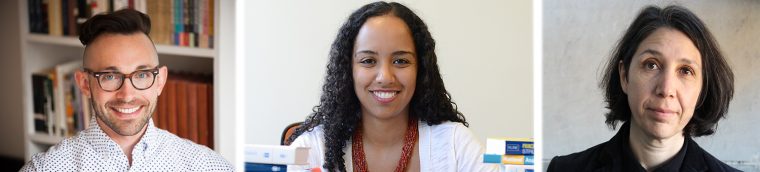
Joshua Takano Chambers-Letson is an Andrew W. Mellon Postdoctoral Fellow, Center for the Humanities. Chambers-Letson joins the Center’s yearlong study of “War,” arriving from New York University where he received a Ph.D. in the Department of Performance Studies where he also received a Master of Arts. He received a Bachelor of Arts in liberal arts with a concentration in theatre from the New School University.

Bill Craighead joins the Economics Department as visiting assistant professor. He is on leave this year from Miami University (more…)

Biology Ph.D. candidate Kate Miller records echolocation calls of bats at one of four study sites along Middletown's Coginchaug River. Miller hopes to identify which types of stream habitats have the most activity, and uncover critical habitats in Connecticut.  (Photos by Olivia Bartlett Drake)

Biology Ph.D. candidate Kate Miller records echolocation calls of bats at one of four study sites along Middletown's Coginchaug River. Miller hopes to identify which types of stream habitats have the most activity, and uncover critical habitats in Connecticut. (Photos by Olivia Bartlett Drake)

Biology Ph.D candidate Kate Miller treks through a wildflower-lined trail alongside Middletown’s Coginchaug River. She approaches a plastic garbage bin and a PCV pipe protruding from the ground.

“That’s my bat echolocation recorder,” she says. “It’s old but I’m not complaining. It was free and it works.” Miller credits Scott Reynolds, Ph.D, of North East Ecological Services in Concord, N.H. for the loan of the equipment.

Inside the crude setup is a 12-volt battery, an echolocation call recorder and lap-top computer. Every 1.5 seconds, the equipment translates the information into a graph and stores it as a data file on the laptop. Miller opens the lap top and examines the graph, which reveals recorded frequencies vs. time on two axis, in real-time.

The meadow is alive with audible sounds of songbirds, crickets and cicadas.

“Right now we’re picking up something with a 10 to 15 kilohertz frequency. We know that’s not a bat since their calls are usually between 25 and 80 kilohertz,” Miller explains, eyeing the lines on the graph. “Humans can only hear frequencies up to about 20 kilohertz.”

Building on studies that identify stream corridors as prime foraging habitats for bats, Miller hopes to identify which types of stream habitats have the most activity. She also hopes to determine whether or not the composition and abundance of “benthic macroinvertebrates” – mostly aquatic larvae that live on the stream bottom and hatch into flying insects the bats consume – is at all correlated (more…)

Wesleyan Writing Programs begin Sept. 23 with a faculty readings and multiple guest speakers.

Lisa Cohen, assistant professor of English; Deb Olin Unferth, assistant professor of English and Elizabeth Willis, the Shapiro-Silverberg Associate Professor of Creative Writing, will read from their work at 8 p.m. Sept. 23 in the Russell House.

Cohen’s poetry and nonfiction have appeared in numerous journals, including Ploughshares, Lit, Barrow Street, GLQ, Fashion Theory, Bookforum, The Boston Review, and Voice Literary Supplement. She is currently completing a group biography of three early 20th century figures—the fashion professional Madge Garland, the fan and collector Mercedes de Acosta, and the eccentric scholar Esther Murphy.

Unferth is the author of a collection of stories, Minor Robberies, and a novel, Vacation, both published by McSweeney’s. Her work has appeared in Harper’s, 3rd Bed, Fence, and other publications. She has received a Pushcart Prize, (more…)

Robert Lane, associate professor of molecular biology and biochemistry, is researching a a complex odorant receptor gene regulatory system. (Photo by Olivia Drake)

Robert Lane, associate professor of molecular biology and biochemistry, is researching an odorant receptor gene regulatory system. (Photo by Olivia Bartlett Drake)

In order for animals to detect food sources, avoid predators and find mates, they rely on their olfactory system, or sense of smell.

The ability to detect and distinguish among thousands of environmental odorants is based on a combinatorial recognition system. A specific smell is coded in the brain by a specific combination of receptor proteins that get stimulated by the unique combination of odorant chemicals elicited by that scent.

“The smell of ‘lemons,’ for example, would result from a specific combination of odorant receptor proteins that become stimulated upon binding the specific set of inhaled chemicals emitted from a lemon,” explains Robert Lane, associate professor of molecular biology and biochemistry.

With support from the National Science Foundation (NSF), Lane will further investigate a complex odorant receptor gene regulatory system. His study, titled “Cross-Disciplinary Science & Investigation of Olfactory Receptor Gene Regulation” was funded with a two-year, $299,995 NSF grant (more…)

« Prev - Next »